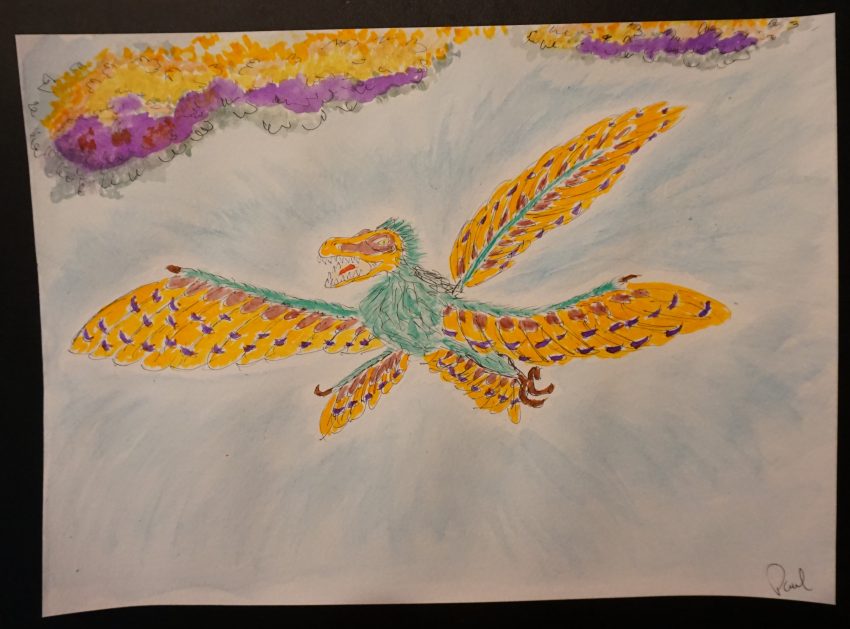
How did Powered Flight Evolve in Dinosaurs? And When?
The Field Museum in Chicago hosted a Fantastic Virtual Meeting limited to Membership at the Museum. More Than Just Bones: Soft Tissue in the Fossil Record presented by Jingmai O’Conner Ph.D. provided many insights on Dinosaurs and Flight and some history of early discoveries of Feathered Dinosaurs. Some 215 Million Years Ago, Dinosaurs ascendancy on land occurred before the close of the Triassic Period. In All their Diversity for a 150 Million Years Dinosaurs were virtually All animals over 1 meter (just over 3 feet) in length on Dry Land!
In 1861 Archaeopteryx was discovered as just one fossilized feather! Later that same year a complete skeleton with the impressions of feathers was uncovered. Thomas Huxley studied the first fossils of Archaeopteryx & Compsognathus (discovered in 1859) and proposed in 1861 that Birds Evolved from Dinosaurs. Darwin’s Evolution Theory “Origin of the Species” was published 1859. The concept of Evolution was still being digested. Huxley’s idea was rejected.
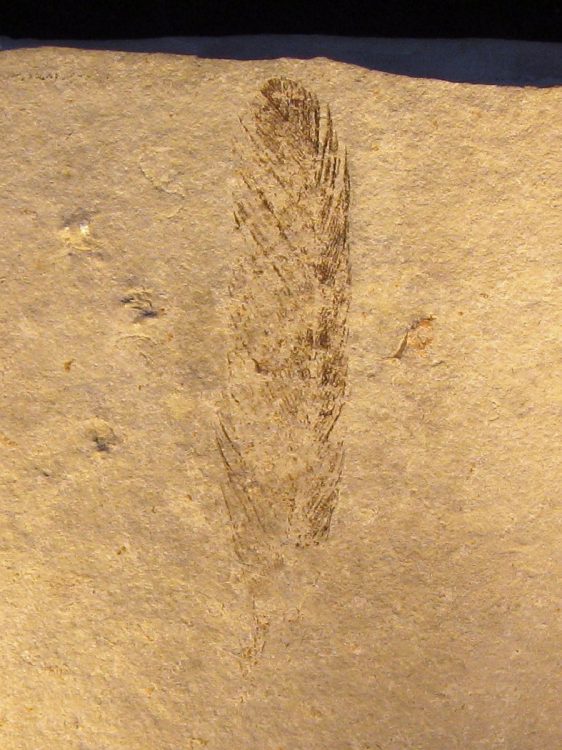
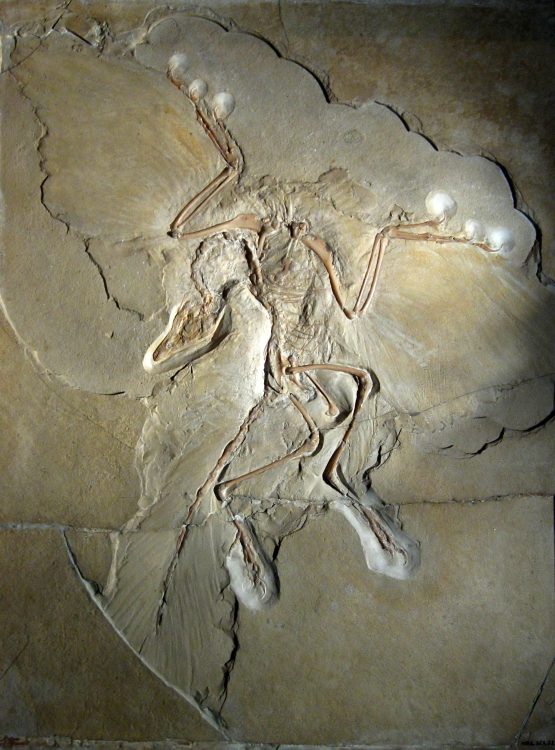
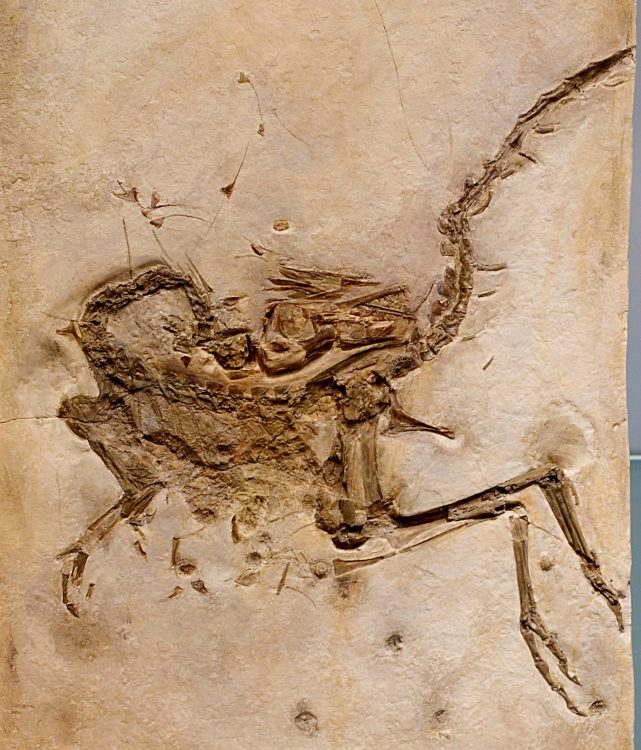
Thanks to H.Raab (User:Vesta) – Own Work for Archaeopteryx Fossil photos and User:Matthias Kabel – Own Work for Compsognathus photo
Over 100 Years Later in the 1970’s, John Ostrom study of Deinonychus led to the resurrection of the Dinosaurs Evolving to Birds Theory which was rejected again. In the 1996 a fossil of a Dinosaur surrounded in Proto Feathers (Filamentous Feathers often referred to as Dinosaur Fuzz) was discovered by a farmer. Sinosauropteryx was proof that cemented the Dinosaur / Bird Connection. The Farmer’s Fossil had broken in two pieces. He sold the pieces to separate Museums neither knew there was another piece to their fossil. Well, at least not for several years.
The Two Types of feathers found on Dinosaurs & Pterosaurs. Filamentous (proto feathers) in Dinosaur Families Tyrannosauroidea, Compsognathidea, Ornithomimosuria, Alvarezsauroidea, Therizinosauria and Pterosaurs.
Pennaceous – Modern Feathers – two vanes divided by a rachis in Oviraptorosauria, Deinonychosauria (Troodontidae & Dromaeosauridae) and Aves (feathered forewing) Families.
Raptors had Pennaceous feathers at least on arms with proto feathers (Dino Fuzz) rest of body). Note the Dino Fuzz at the base of the Pennaceous Feather with our T-Rex model below.
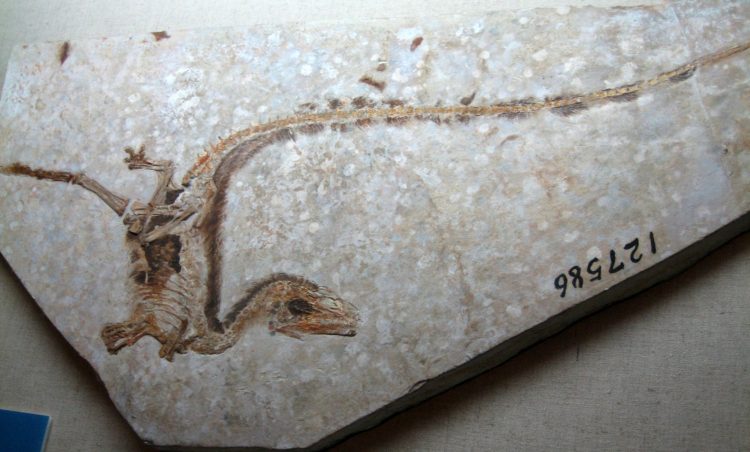
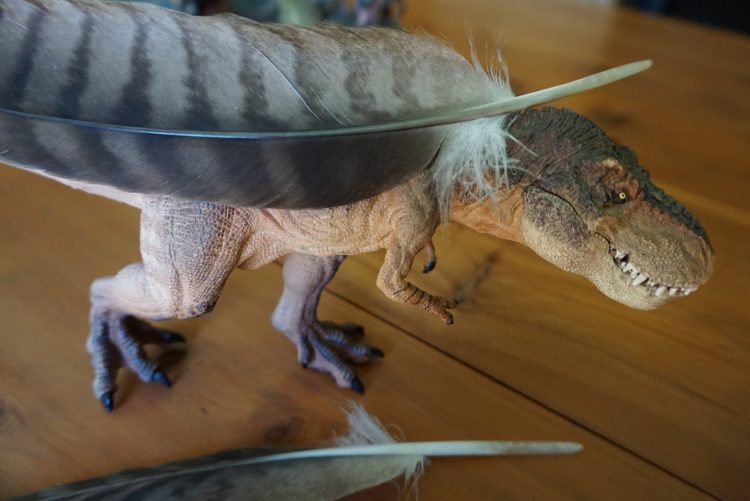
Thanks to Sam/OlaiOse/Skjaervoy from Zhangjiagangi, China Dinosaurs for the Sionsauropteryx photo
You might ask, “Why are some fossils preserved so much better than others?” How and Where the Animal Died makes a World of Difference. If killed by a Predator there might be little left and the remaining fragments could be spread over a large area by scavengers. Floods have killed and buried many dinosaurs at the same time providing some very good fossils of multiple individuals of various ages. Areas that had High Volcanic activity as regions in Asia are the reason China has produced tremendous amounts of incredibly preserved fossils. The Volcanic Gases killed the Dinosaurs and then the Ash covered them quickly. Dr. O’Conner explains the Best Fossils come from Lakes of the Time. Lake bottoms do not have oxygen which supports life that feeds on the dead animals. Lakes near Volcanos have ion deposits which aid in the preservation of animals.
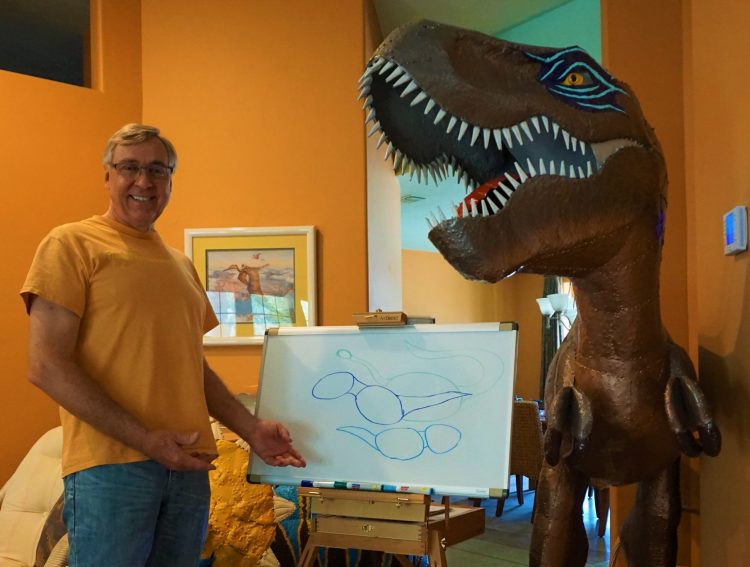
Stay Tune for progress on this Sketch to Watercolor!
The Lake beds are more likely to have Fossils with preserved Soft Tissue. Dr. Jingmai O’Conner discussed many of the benefits having “Soft Tissue” to study. One example is the ability to determine Male or Female from the soft tissue remains. Confuciusornis Streaming Tail feathers are a Male feature. No Female has been discovered with elongated tail feathers. She mentioned many Women in STEM (Science, Technology, Engineering and Mathematics) that study Soft Tissue. In particular Mary Schweitzer, North Carolina State University her study of T-Rex pliable tissue & blood cells. Jasmina Wienmann PhD, Yale determining the Color of Dinosaur Eggs and much more.
My favorite part of the Virtual Meeting was the concept that Dinosaurs Evolution to Flight was not just one attempt that result in today’s Birds. Theory of Multiple Flight Origins:
First the famous Archaeopteryx with all its details from 1861.
Microraptor Zhaoianus Tetrapteryx (Dromaeosauridae) discovered in 2000 with some feathers. Later in 2003 an almost complete fossil with Long Feathers not just on the Arms but Legs too! Suggesting a four-winged gliding stage before birds. Interesting note: In 1915 Charles W. Beebe suggested birds started with 4 wings as gliders, 85 years before the discovery of Microraptor.


Thanks to David W.E. Hone, Helmut Tschlinger, Xing Xu, Fucheng Zhang for Fossil photo and Durbed-http://durbed.deviantart.com/art/four-winged-thieves 341517949 for the illustration of Microraptors
In 2002 Scansoriopteryx was discovered a gliding dinosaur with wings like Pterosaurs & Bats. In 2008 Epidendrosaurus was found also a gliding dinosaur. However, it wasn’t until 2015 when a more complete larger and excellently preserved fossil of Epidendrosaurus was uncovered with the 3rd digit very elongated additional long bone coming from wrist with the Filamentous/Proto Feathers preserved which confirmed the supported wing like Pterosaurs & Bats.
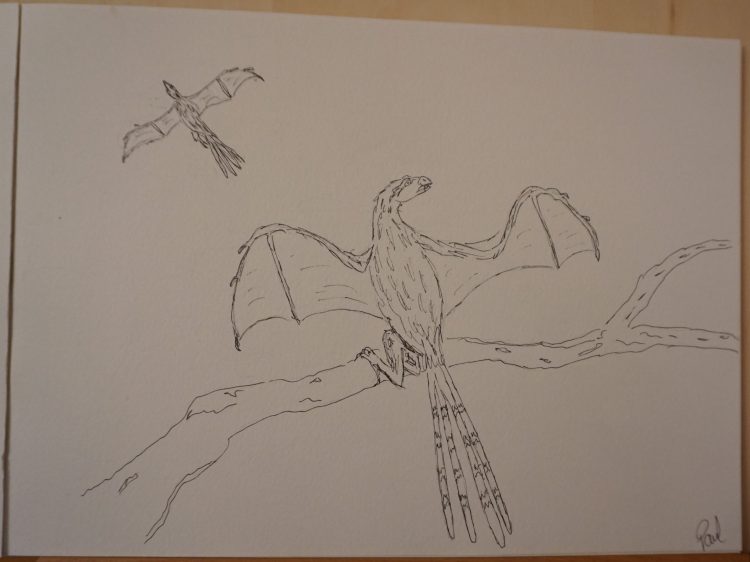
Another Stay Tuned Artwork in Progress Event!
Finally, Rahonavis (cloud menace bird) from the Maevarano Formation, Madagascar originally thought to be a bird but now believed to be a flying Dinosaur of the Dromaeosauridae Family. No soft tissue was found and the Formation where Rahonavis was found does not preserve soft tissue, so it is unlikely any will ever be found.
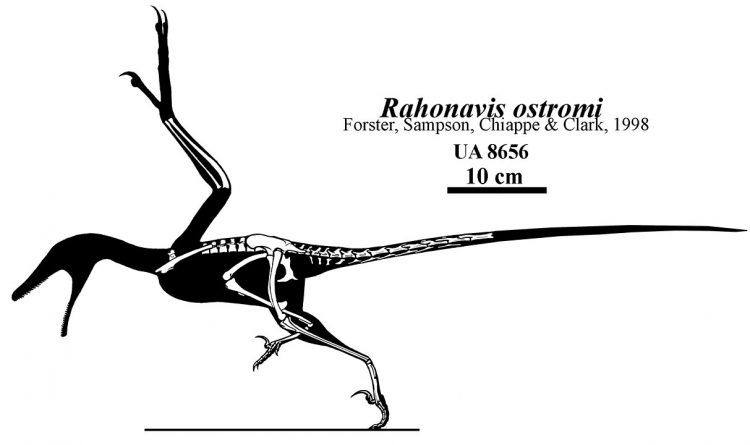
Thanks to Jaimie A. Headden (User:Qilong)-http://qilong.deviantart.com/art/Terror-from the-Clouds- 109945917 for Rahonavis Diagram
Dominic the T-Rex & Xiuhcoatl the Dragon have been attending most of my Virtual Meetings. Xiuhcoatl and I were Extremely Excited to learn about the Scansoriopterygidae Family. We’ve been sharing our belief “Dragons are Undiscovered Dinosaurs” and now we know of a Dinosaur Family that has a strong resemblance to Dragons. We may be very close to a Dragon Discovery!
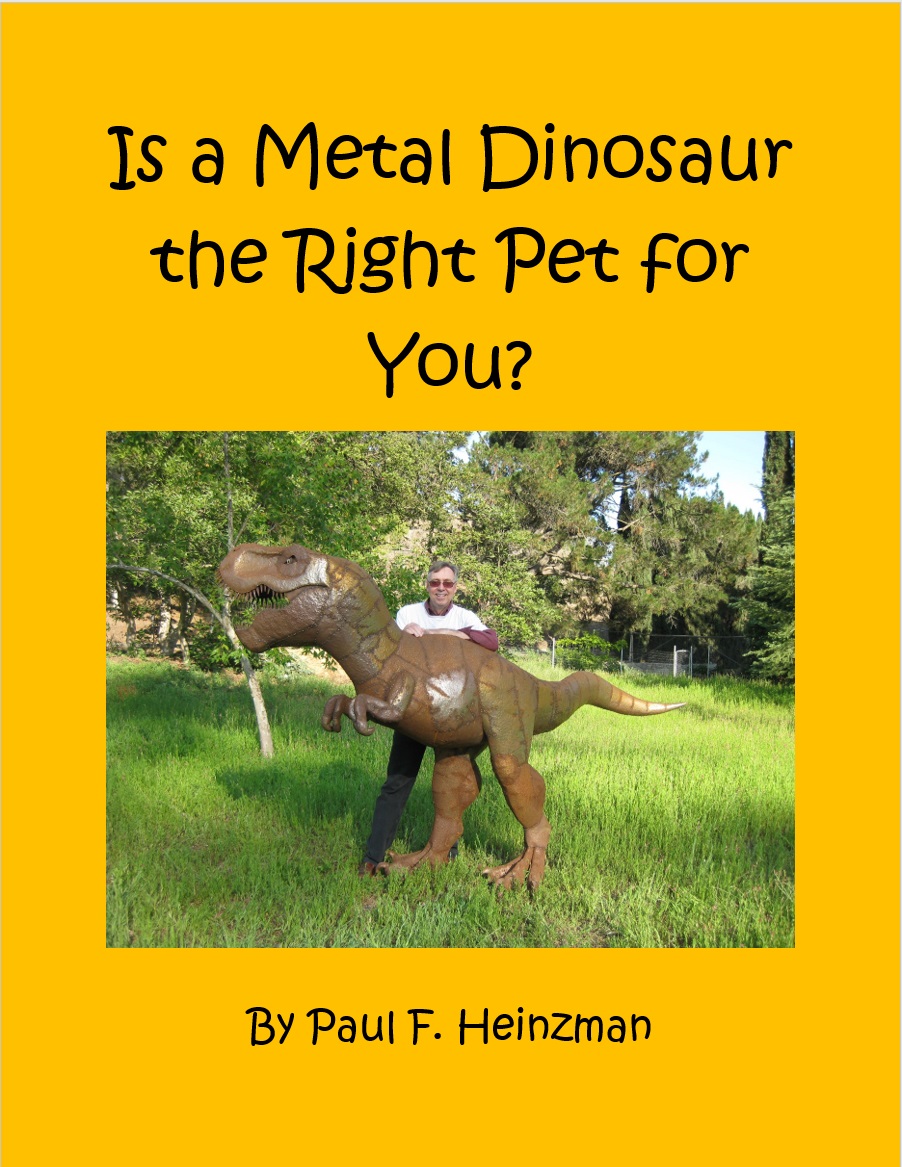
My First Book “Is a Metal Dinosaur the Right Pet for You?” is Available as an eBook on Kindle through Amazon.com
Only $3.99!
Included are two photos of Prehistoric Pals converted to black & white line drawings for You to express Your Color Imagination! Search online for print options on Your device. Print Screen, Cropping & Printing are available on many smart phones. Your smart phone may even allow You to email Your Print Screen to Yourself allowing even more options before printing. Kindle has an app for smart phones!
I would love to see Your Color Visions for Dominic & Raphael! Use crayons, pencils, pens, or watercolors! Attach feathers, glitter whatever brings them to life for You. Send a picture of Your Colorized Imaginations to: paul@paulsprehistoricpark.com It could be in a future post!
I will keep You posted with information on my Next eBook “The Shy Triceratops”. I hope to have Paperback versions available later in 2021.
Museums continue reopening with Limits on Guests, Social Distancing & Mask requirements to keep Visitors Safe while They Enjoy Their Learning Experience. Consider a Membership with the Museum. In addition to Supporting Their Valuable Work there are Benefits to You. Special Preview Events for Members Only as well as Virtual Access Exclusive for Members. For more information and access to general public eLearning check out the links below.
The Natural History Museum of Los Angeles County www.nhm.org under Research & Collections / Digitized Collections will allow you to browse their Collections. Check out the latest Activities on their site.
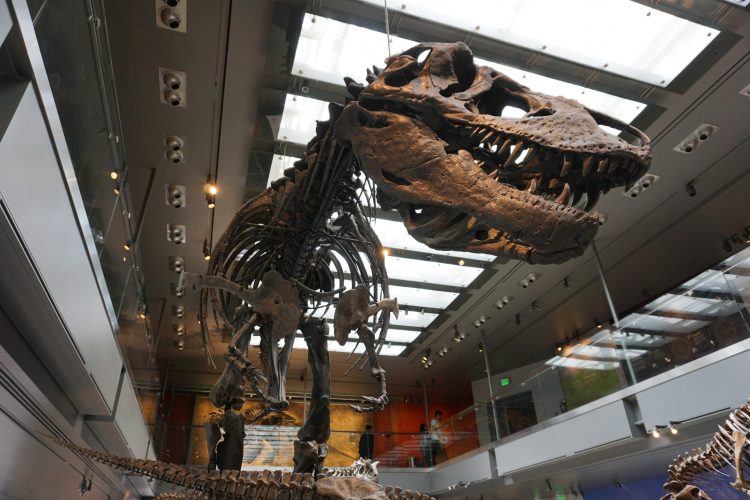
The American Natural History Museum www.amnh.org You will find eLearning for Families, Students & Educators. Explore the Museum Virtually. Check Out SciCafe: Video Talks and Meet the Icons: Stories behind the Exhibits! There are Video Series covering Behind the Scenes at the Museum with Space & Dinosaur Explainers.
Chicago’s Field Museum www.fieldmuseum.org You can talk to “Maximo the Titanosaur” online, Yes Really! Visit Sue the largest T-Rex discovered! Check Out “Brain Scoop” and the Learning Resources – many are also in Spanish.
Check Out Your Libraries eBooks. My local Library has over 900 eBooks on Dinosaurs! Libraries are reopening and many still offer “Curbside Pick-up. Here are three books for Drawing Dinosaurs that you might find at your Library. Ask your Librarian about others.
Dinosaurs! A Drawing Book by Michael Emberley (1980)
1-2-3 Draw Dinosaurs and other Prehistoric Animals A step by step guide by Freddie Levin (2001)
Draw 50 Dinosaurs and other Prehistoric Animals by Lee J. Ames (1977)
Stay Safe & Well.
Please Remember to Wear Masks & Social Distance As Appropriate Not everyone has been Vaccinated. Protect Yourself, Friends, Family & Everyone You Pass!
Thank You!
“Encouraging the Appreciation of Art and Education through the Inspiration of Dinosaurs”
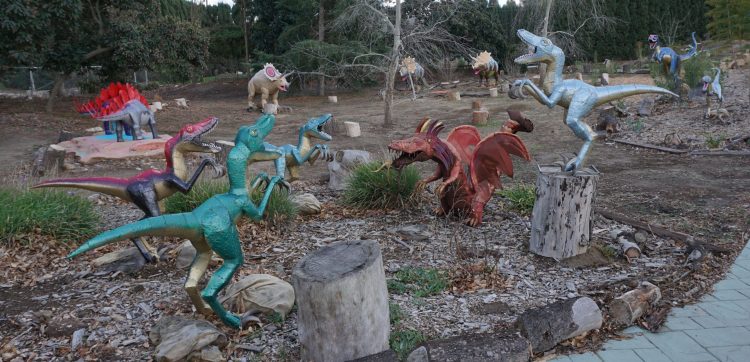
Paul & Prehistoric Pals
Your feedback is appreciated, comment below or email:
Thank you!