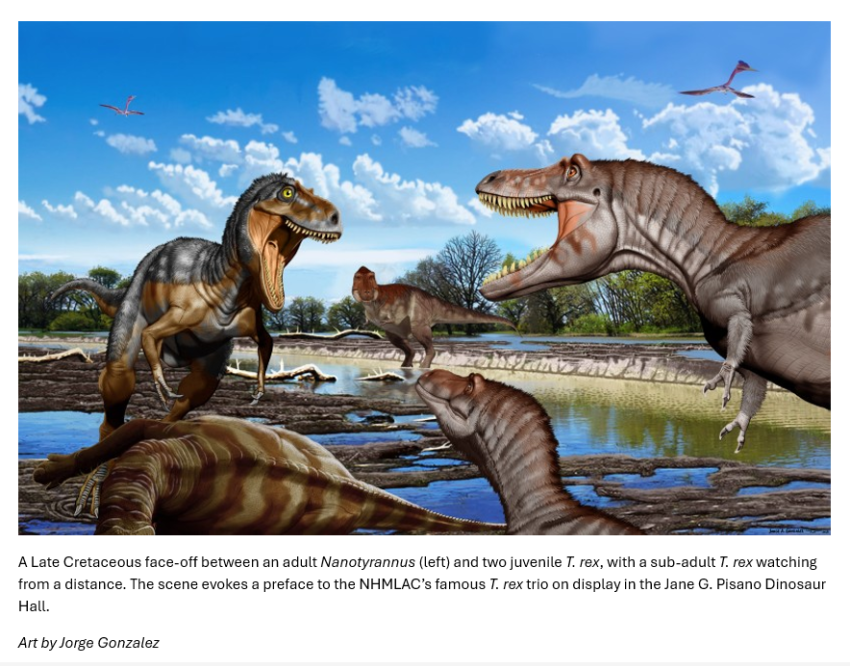
Return of the Short (Tyrant) King: A Paper by Dinosaur Institute Researcher Shows Nanotyrannus Was Not a Juvenile T. rex
Dinosaur Institute researcher shows throat bones accurately record maturity in dinosaurs, establishing Nanotyrannus was a fully grown, entirely distinct species from T. rex
Los Angeles, CA (December 4, 2025)—For decades, paleontologists argued over the lone skull used to establish the distinct species Nanotyrannus. Was it truly a separate species or simply a juvenile Tyrannosaurus rex? A paper published in Science has definitively shown that Nanotyrannus is, in fact, nearly fully grown and not an immature T. rex, at the same time revealing new insights into how these giant predators achieved such terrifying sizes so quickly.
A multi-institutional team, including Dinosaur Institute Postdoctoral Fellow, Dr. Zach Morris, examined the much-debated Nanotyrannus holotype—the specimen used to name a new species—particularly its throat bone. The team examined the bone’s microscopic structure, comparing it to those of living birds, crocodilians, and extinct dinosaurs—including the Dino Hall’s singular T. rex growth series—to establish that Nanotyrannus, while smaller, was a fully grown and distinct predator in an ancient ecosystem more diverse than previously imagined. Slightly less than half the size of their massive adult cousins, Nanotyrannus competed with juvenile T. rex for prey in Late Cretaceous North America.
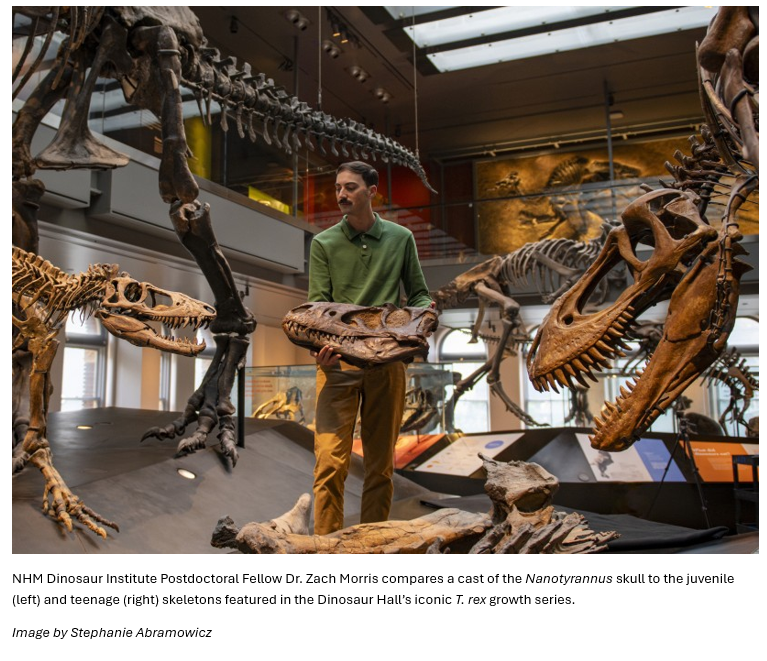
“The identity of the holotype specimen was the key piece in this debate. Discovering that this small skull was actually fully grown shows definitively that it is different from Tyrannosaurus rex,” said Dr. Christopher Griffin, lead author and Assistant Professor of Geosciences at Princeton University.
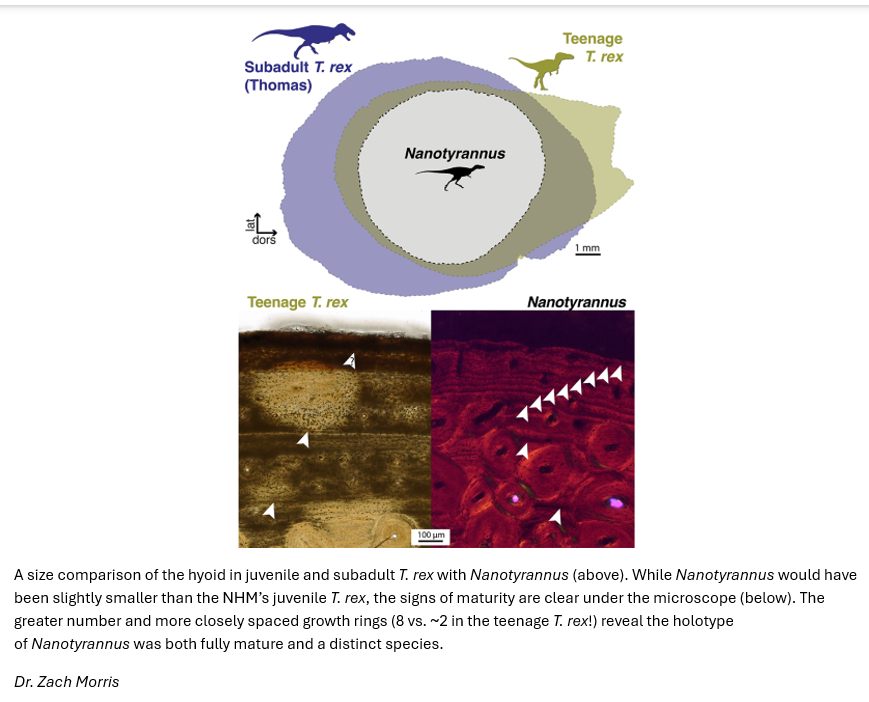
Just as cutting a tree and counting its growth reveals its age, cross-sectioning a dinosaur’s bones can reveal how mature it is. Researchers examine thin slices of fossil bone under a microscope, measuring the organization of the tissues to gauge the age of the animal in life and understand how quickly it grew. Researchers typically use long bones, such as femora or ribs, but these do not survive intact in every fossil specimen. The Nanotyrannus holotype is mostly a skull, and skulls are rife with sinus cavities and other irregularities that make them unsuitable for the technique. However, the hyoid—a throat bone that supports the tongue—of the specimen was potentially able to answer this question once and for all.
“When we started this project, it was unclear whether the hyoid preserved a record of a dinosaur’s growth. To be honest, we mostly accepted the hypothesis that Nanotyrannus was a juvenile T. rex, so we expected the microscopic bone structure or histology of the holotype would show this animal was still growing quickly,” said co-author Dr. Morris. “What we did not expect was to see it was nearing maturity with clear evidence of the cessation of growth!”
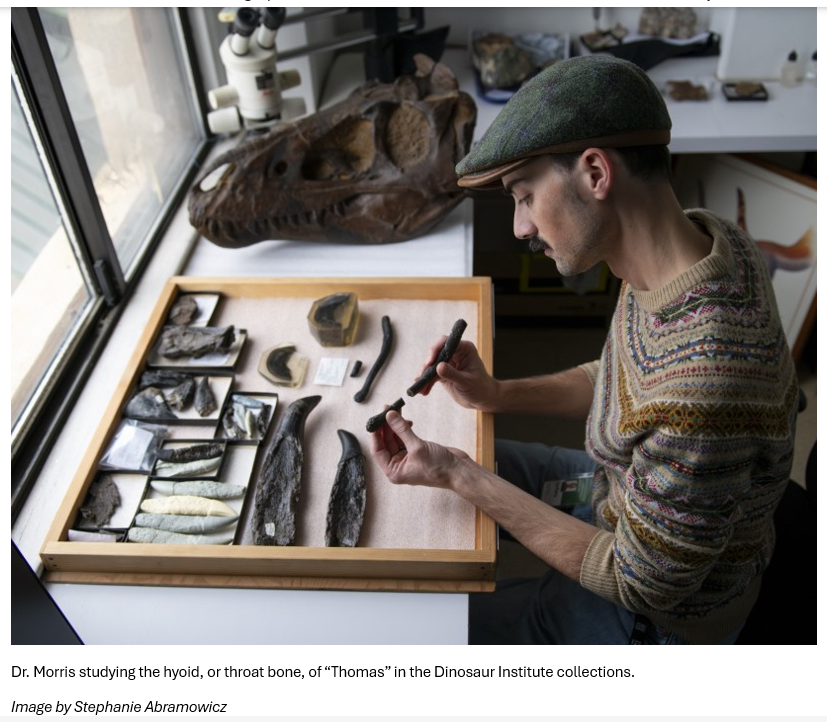
Since no one had previously demonstrated that hyoid bones preserve a useful record of an animal’s growth, the team needed to prove that the throat bone could be a reliable gauge for maturity. To test its viability, Dr. Griffin brought together a team of experts to build a database comparing the hyoids of a range of species, from living lizards, crocodiles, and birds to extinct dinosaurs. “To show that hyoid microstructure would work to test maturity status in Nanotyrannus, we first had to compile strong support for this method across many groups of living reptiles and extinct dinosaurs,” said Dr. Griffin.
Dr. Morris oversaw the sampling and analysis of the juvenile and sub-adult “Thomas” in NHM’s one-of-a-kind T. rex growth series. “The growth series in our Dino Hall was critical to demonstrating that the hyoid in Tyrannosaurus showed the same kind of growth record as long bones,” said Morris. “Having a growth series that had already been histologically analyzed meant that we could compare the growth record in the hyoid and the growth record in the long bones and see that they show consistent signals even in these uniquely giant predators.” Having the T. rex growth series available provided benchmarks to better understand and assess differences in growth between T. rex and Nanotyrannus.
“Our teenage Tyrannosaurus looks immature in both its limbs and its hyoid, while Thomas looks like a more mature, but still not quite adult animal. Amusingly enough, Thomas is not nearly as mature as the Nanotyrannus holotype, despite being much larger,” added Morris.
The study highlights the importance of understanding the maturity of holotype specimens; otherwise, scientists might confuse evolutionary and developmental differences. “So many techniques in modern paleontology require some degree of destructive analysis, and as a Curator, I’m always trying to strike a balance between conservation and discovery. We preserved the anatomical data by 3D scanning and molding and casting the hyoid, and there is still more of it for future analyses,” said senior author Dr. Caitlin Colleary of the Cleveland Museum of Natural History (and incidentally, a former undergraduate volunteer in the NHM Dinosaur Institute). “In this instance, it was totally worth it because we gained so much more than we lost.”
The discovery also begins to paint a different picture of the world of Late Cretaceous North America, which until recently saw T. rex as the lone apex predator prior to the end-Cretaceous mass extinction. “It is remarkable that our study matches findings from other independent lines of evidence, including an analysis published the month prior to ours, demonstrating that multiple species of tyrannosaurs lived alongside one another. It shows that we need to re-evaluate what we think these ecosystems looked like,” said Dr. Morris.
Dr. Morris is the inaugural Dinosaur Institute Postdoctoral Fellow, where his research focuses on investigating the developmental origins of evolutionary patterns and using museum collections to understand how the skull changes in the fossil record. “I am fascinated by the ways in which changes during development give rise to the skeletal features which distinguish dinosaurs, birds, crocodilians, and other vertebrates,” said Morris. “This project was an exciting collaboration to study developmental patterns in the fossil record directly.”
“Zach’s expertise in dinosaur growth and development, coupled with his histological skills, was a huge asset to this project. It’s another example of our NHMLAC Post-Docs conducting novel, ground-breaking research,” said Dr. Nate Smith, Gretchen Augustyn Director & Curator of the Dinosaur Institute. “This study also highlights the incredible potential of unique museum collections like our T. rex growth series, which not only inform the public but also provide rich ground for new scientific discoveries.”
About the Dinosaur Institute:
The Dinosaur Institute (DI) houses NHMLAC’s collection of Mesozoic tetrapods (four-limbed vertebrates), dating from 250 million to 65.5 million years ago. This collection includes fossils of dinosaurs spanning the Mesozoic Era, as well as fossils of other tetrapods that lived alongside the dinosaurs, such as flying and marine reptiles, crocodiles, turtles, amphibians, and early mammals. The DI maintains an active paleontological training program, supporting undergraduates, PhD students, and Postdoctoral fellows.
About the Natural History Museum of Los Angeles County:
The Natural History Museum (NHM) is one of Los Angeles’ oldest cultural institutions and anchor of the evolving cultural, educational, and entertainment nexus in Exposition Park. NHM’s collection ranges from 4.5-million-year-old meteorites to newly discovered species explored throughout immersive visitor experiences such as Age of Mammals and the award-winning Dinosaur Hall. The outdoor 3.5-acre Nature Gardens and indoor Nature Lab look at people’s relationship with the environment in L.A., while another beloved permanent exhibit, Becoming Los Angeles, examines how L.A. has changed over time. NHM also features industry-leading habitat dioramas, an exquisite gem and mineral hall, a hands-on Discovery Center, and behind-the-scenes experiences such as the Dino Lab, where fossils are prepared in public view. NHM Commons, a new community-focused wing designed to open new doors to natural history and celebrate the intersections of science, nature, and culture.
The tiny
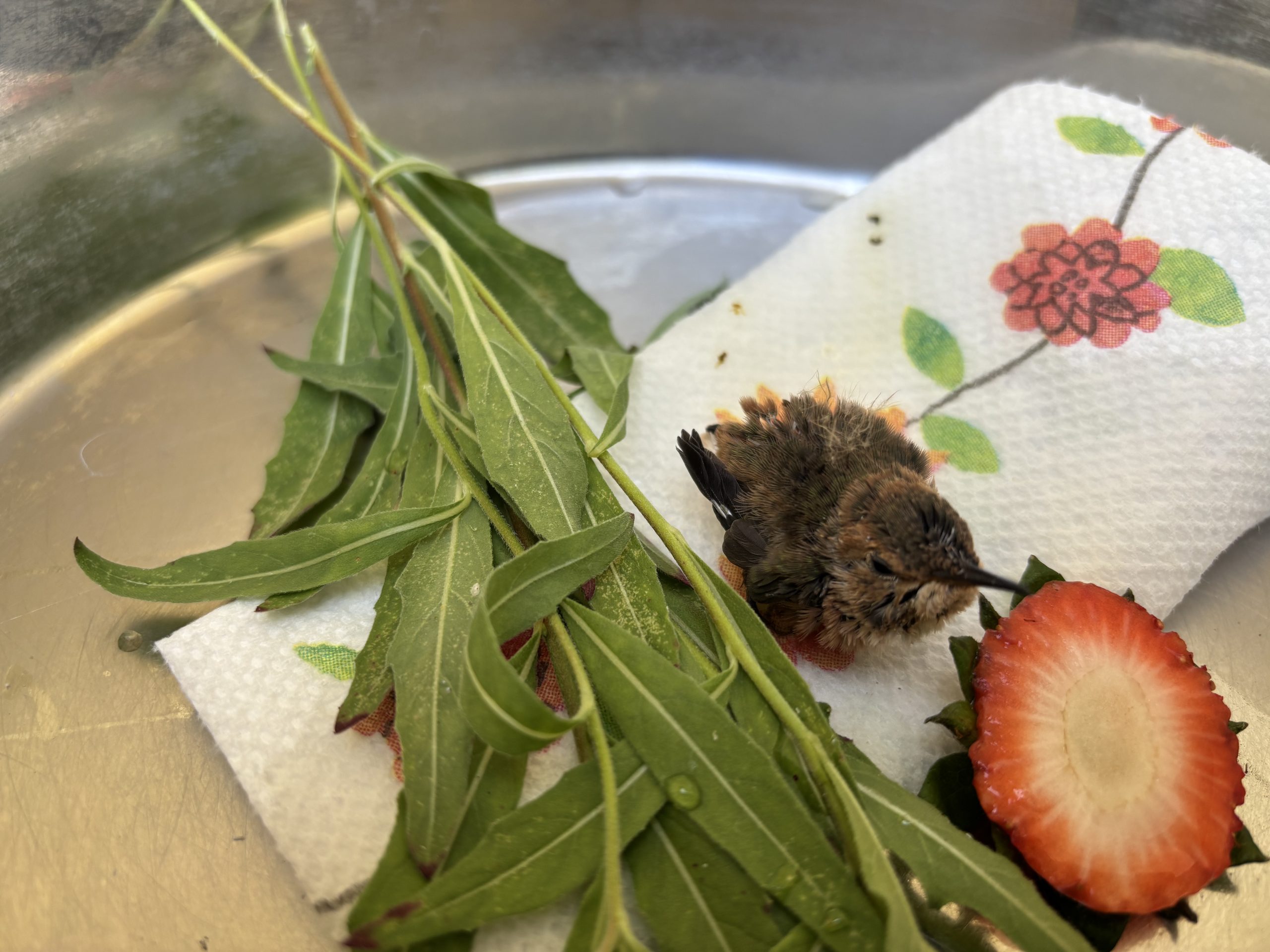
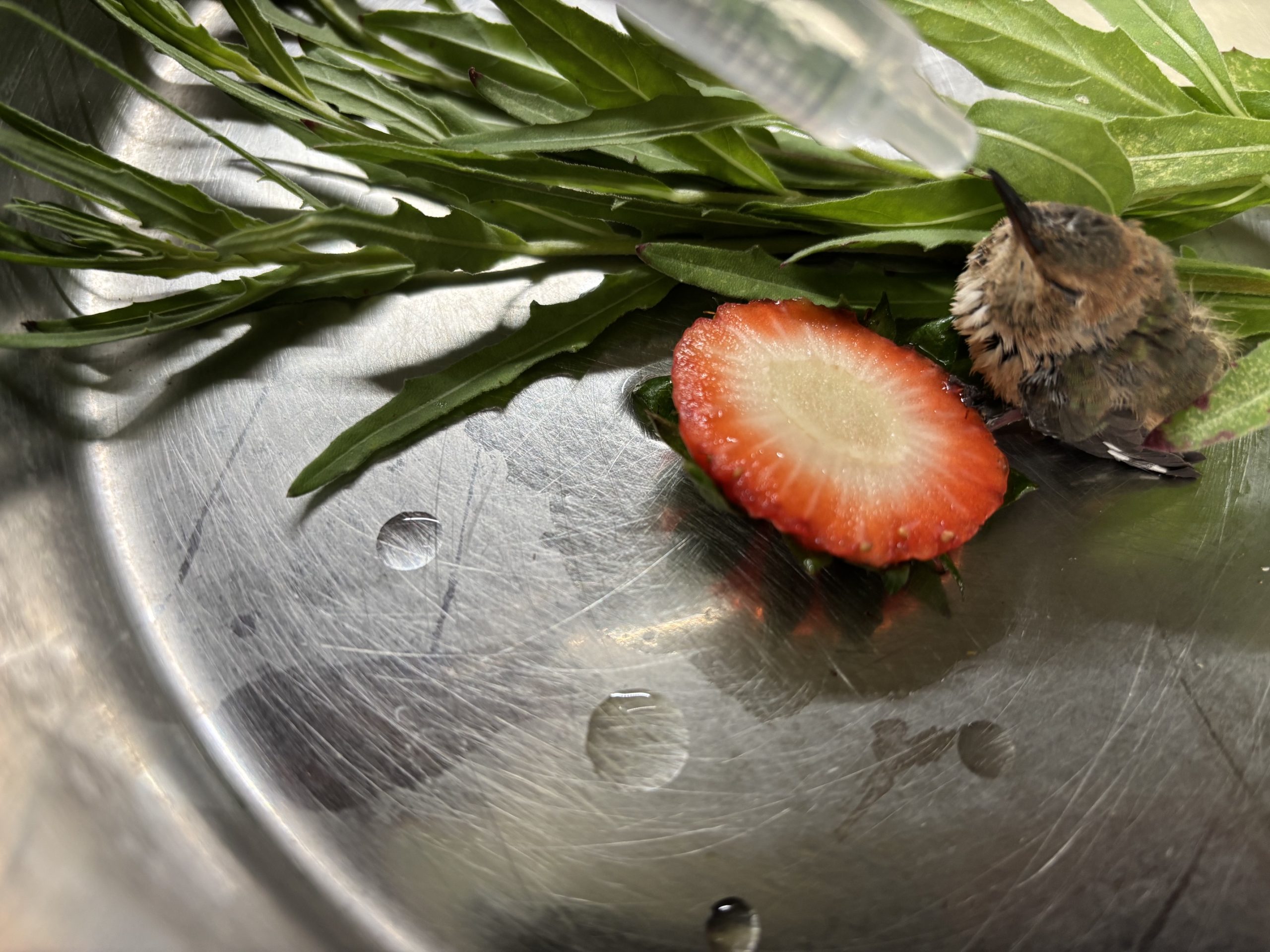
I found a baby hummingbird that had fallen from its nest. Perhaps they are tiniest living dinosaur. I used a small plastic syringe to feed the little one sugar water. I knew I didn’t have the expertise to care for the tiny wonder. I searched for bird sanctuaries in my area and found one. They referred me to someone that rescues birds and she has nurtured hummingbirds back to health. I delivered our rescue to her and hope he/she is now buzzing the neighborhood.
Stay Tuned for More Dinosaur Fun Facts, Fiction & Crafts!
Consider a Membership with the Museum. In addition to Supporting Their Valuable Work there are Benefits to You. Special Preview Events for Members Only as well as Virtual Access Exclusive for Members. Below are 3 of my favorites Museums. For more information and access to general public eLearning check out the links below.
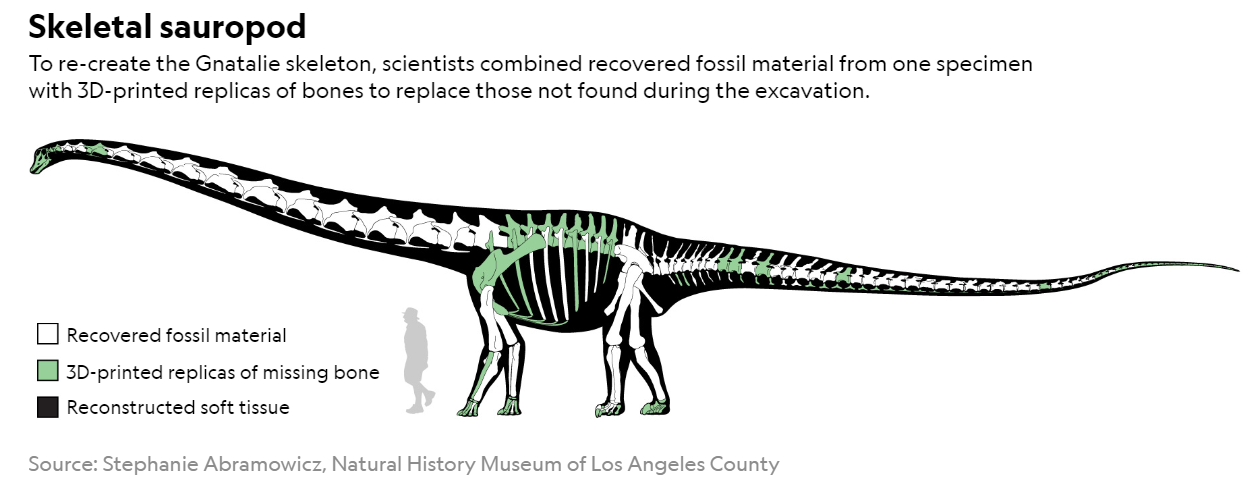
The Natural History Museum of Los Angeles County www.nhm.org under Research & Collections / Digitized Collections will allow you to browse their Collections. Check out the latest Activities on their site. Look for Gnatalie the Green Dinosaur!

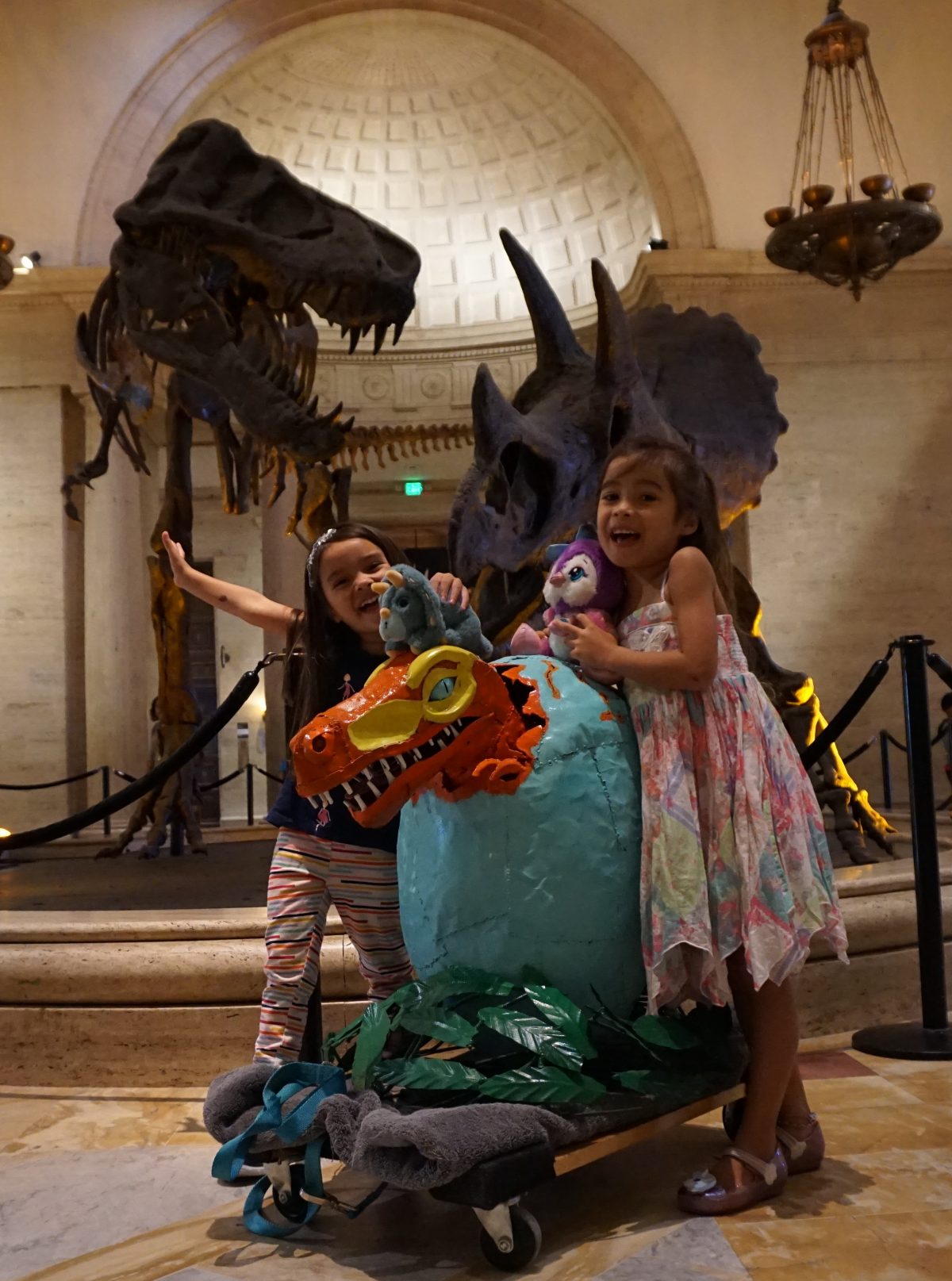
The American Natural History Museum www.amnh.org You will find eLearning for Families, Students & Educators. Explore the Museum Virtually. Check Out SciCafe: Video Talks and Meet the Icons: Stories behind the Exhibits! There are Video Series covering Behind the Scenes at the Museum with Space & Dinosaur Explainers.
Chicago’s Field Museum www.fieldmuseum.org You can talk to “Maximo the Titanosaur” online, Yes Really! Visit Sue the largest T-Rex discovered! Check Out “Brain Scoop” and the Learning Resources – many are also in Spanish.
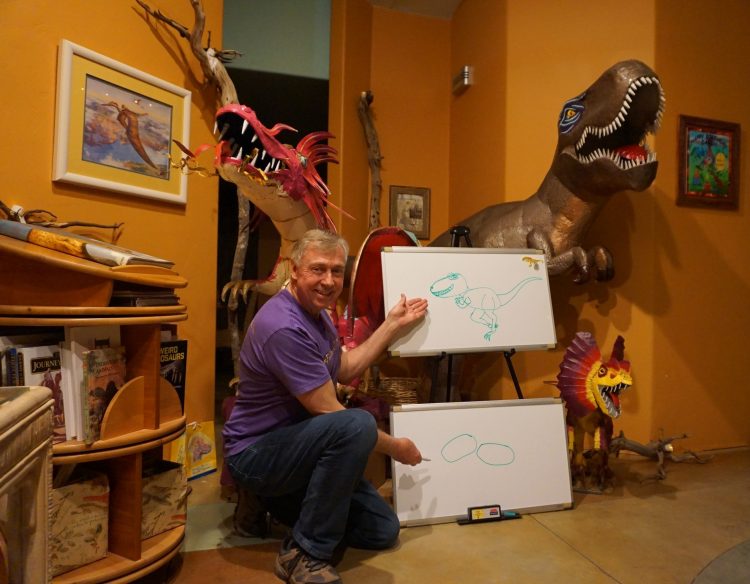
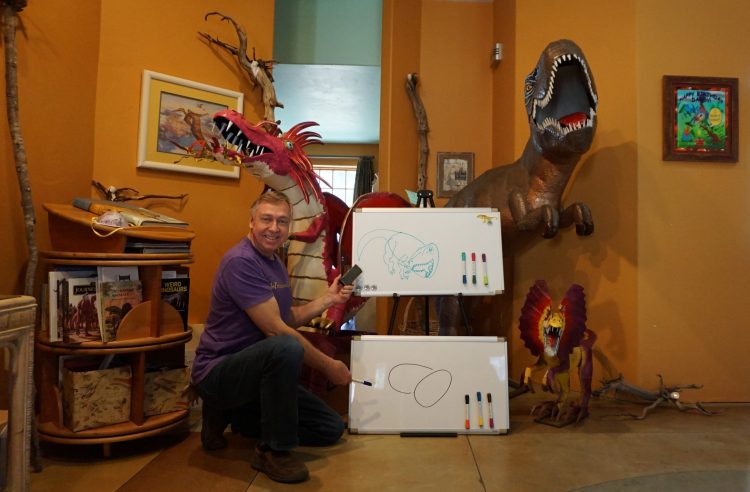
Check Out Your Libraries eBooks. My local Library has over 900 eBooks on Dinosaurs! Here are four books for Drawing Dinosaurs that you might find at your Library. Ask your Librarian about others.
1-2-3 Draw Dinosaurs and other Prehistoric Animals A step by step guide by Freddie Levin (2001)
Draw 50 Dinosaurs and other Prehistoric Animals by Lee J. Ames (1977)
Draw it Dinosaurs by Patricia Walsh (2006)
I Can Draw Dinosaurs by Terry Longhurst (2003)

Stay Safe & Well
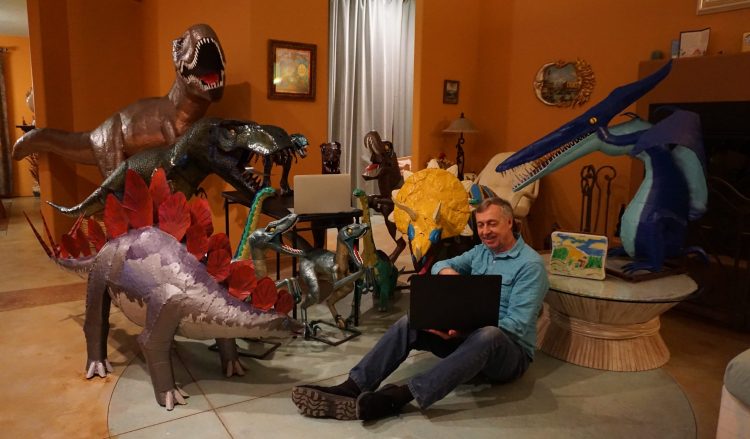
“Encouraging the Appreciation of Art and Education through the Inspiration of Dinosaurs”
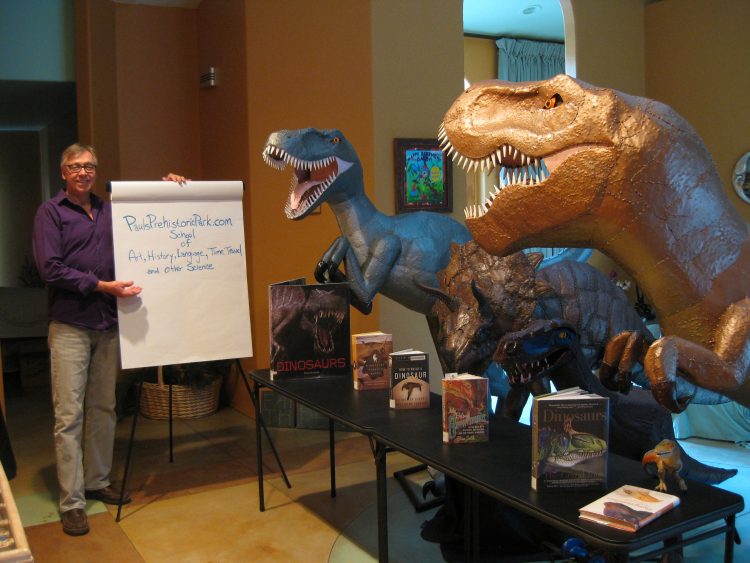
Paul & Prehistoric Pals
Your feedback is appreciated, comment below or email:
Thank you!