Skip to content
Menu
paulsprehistoricpark.com
  • Home
  • About Me
  • Transformation Gallery
  • Needing Rescue/Adoption
  • Contact / Events
paulsprehistoricpark.com

Fly a Pterosaur at the Natural History Museum Los Angeles

Posted on September 18, 2016August 26, 2017

Hurry, the last day is October 2, 2016.  The exhibit opened July 3rd.  I waited until school was back in session to avoid the crowds.
img_3561 img_3569

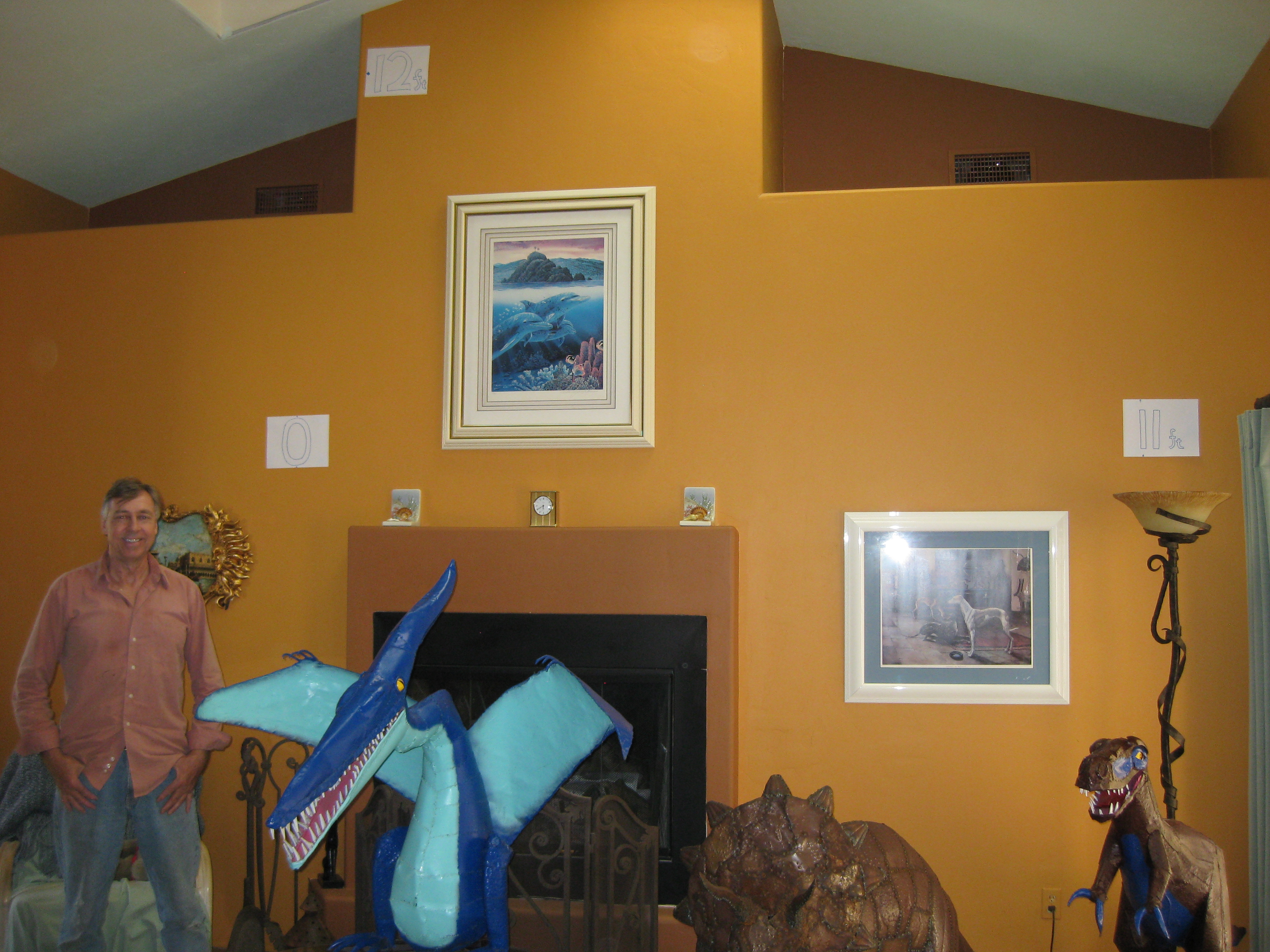
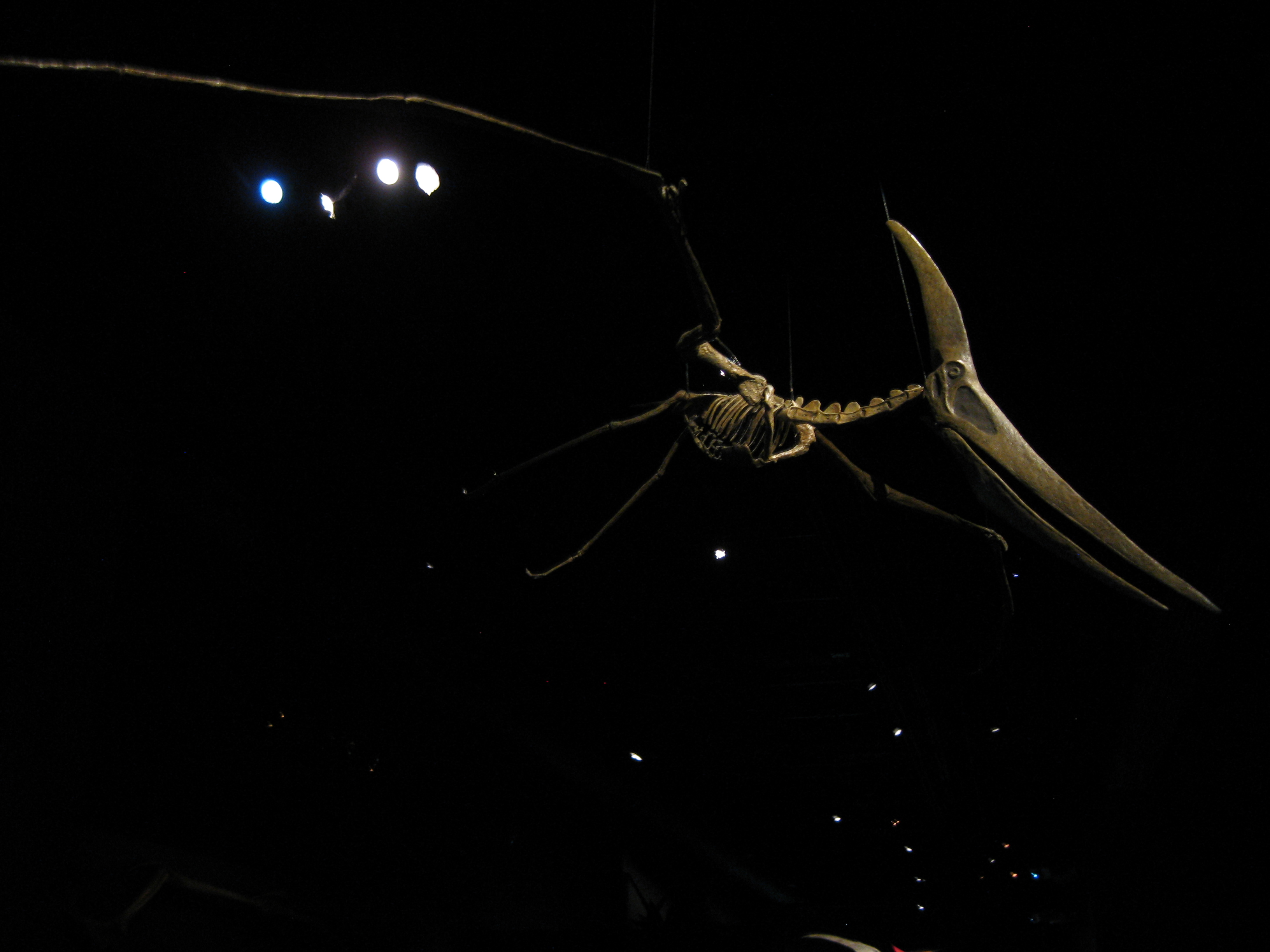
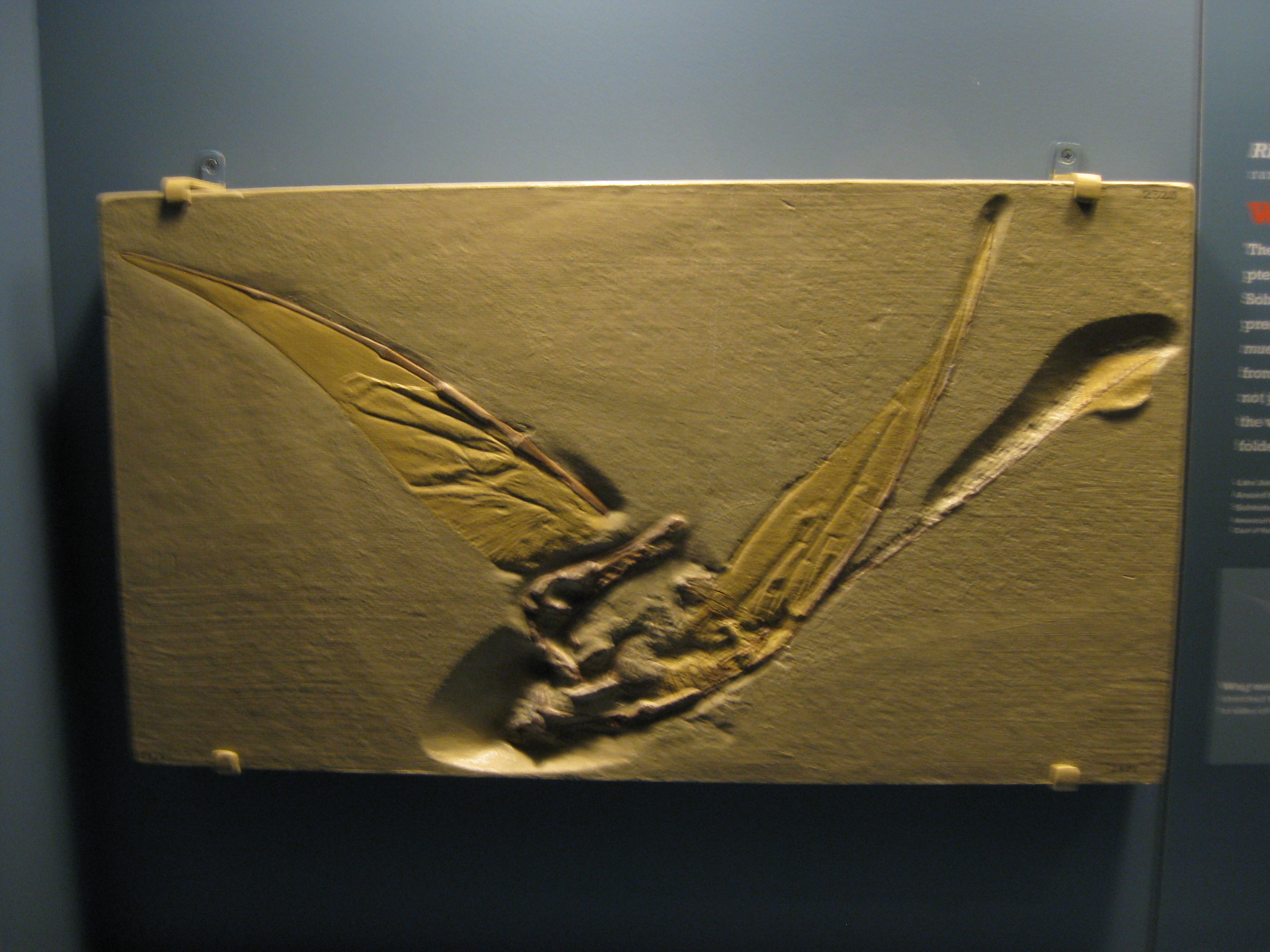
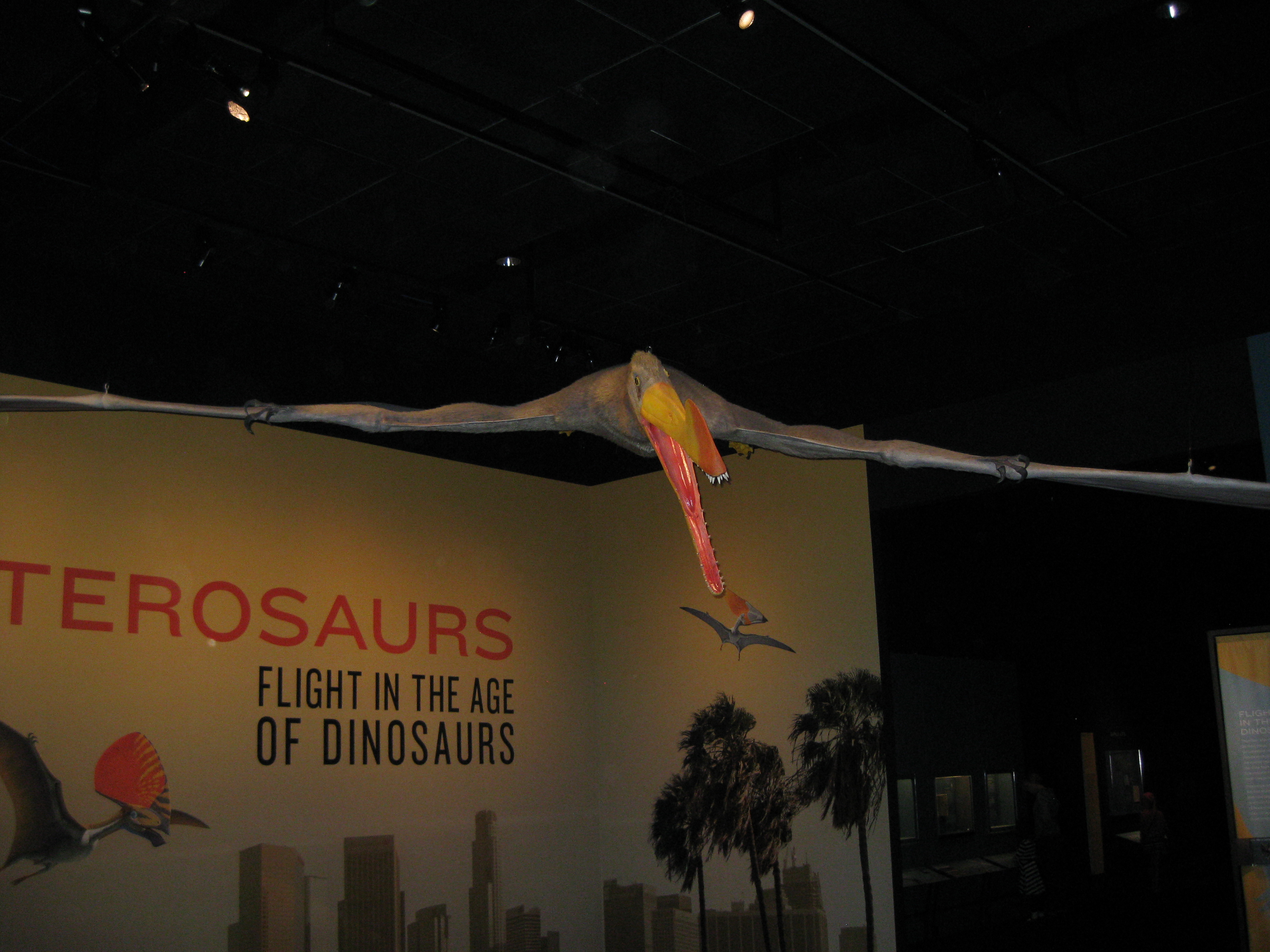
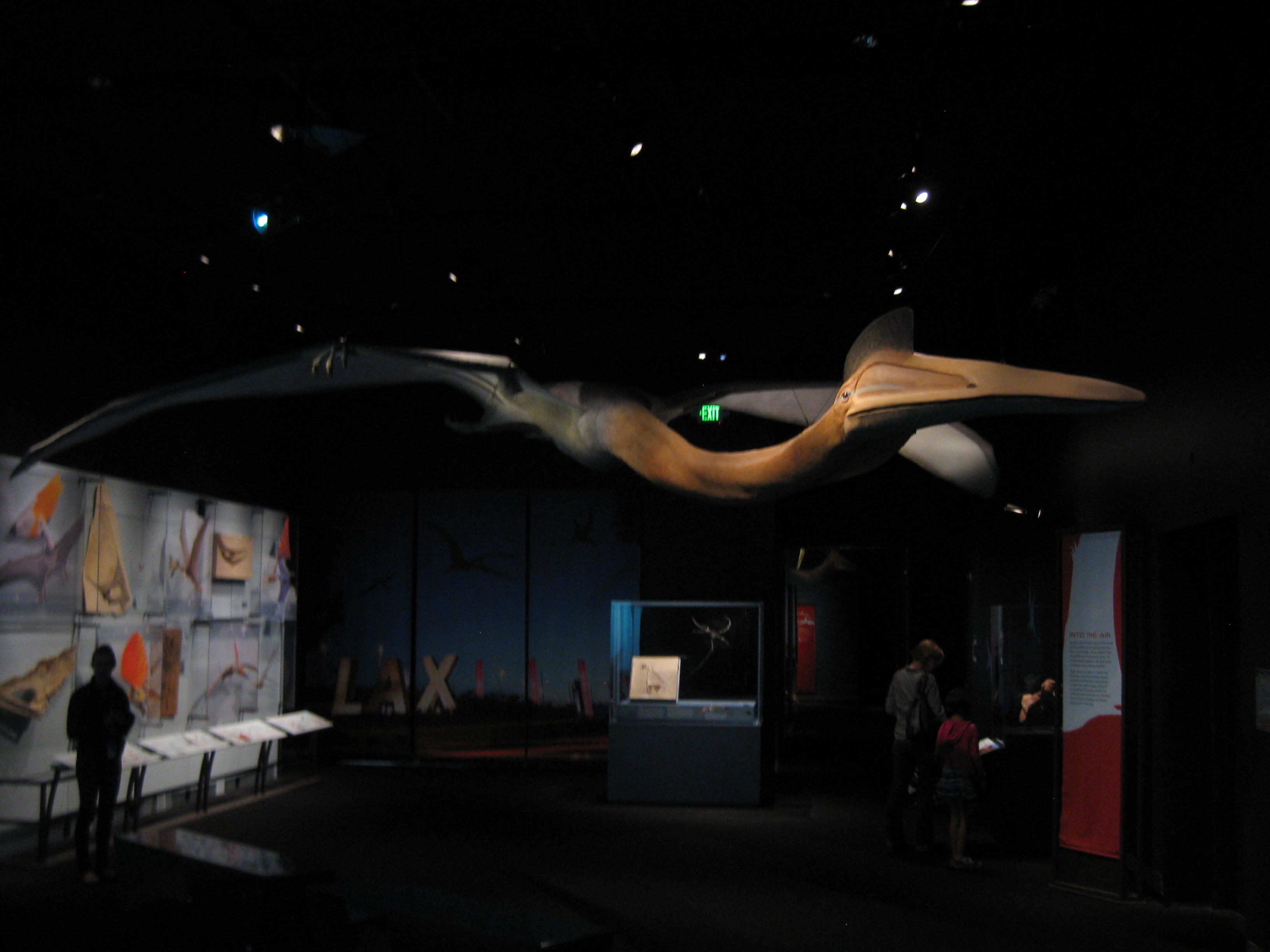
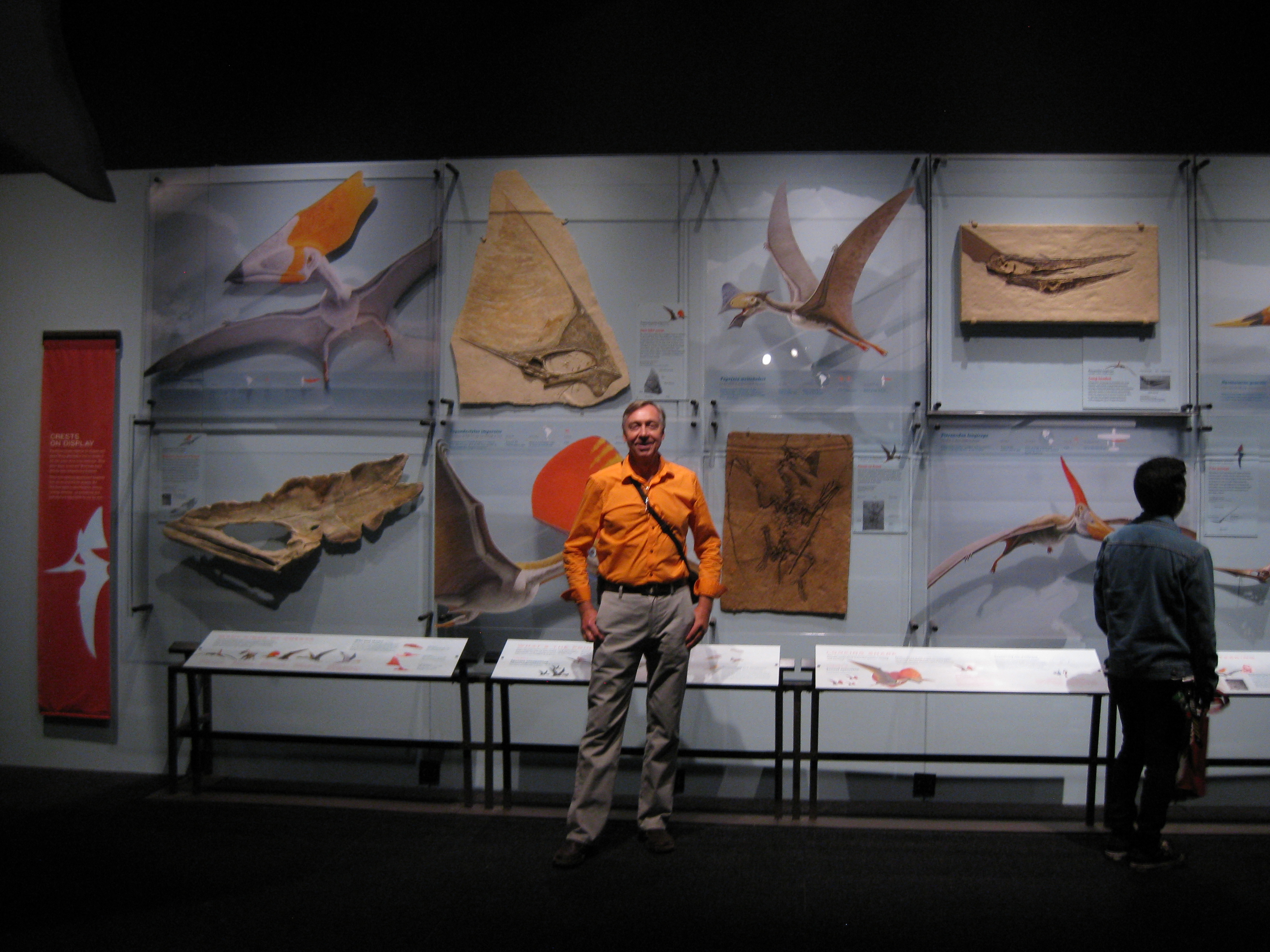
Pterosaurs are considered flying reptiles even though they are believed to have been warm blooded and covered with fur.  They were the first animals to fly after insects.  The exhibit is fantastic!  There are Pterosaurs from the size of an insect, Nemicolopterus Crypticus (shown above – under the head fossil of Tropeognathus Mesembrinus – say that fast 3 times) to 16 feet tall – standing on all for limbs – and having a 22 foot wingspan, Quetzalcoatlus Northrop.  Named after the flying Aztec god is the size of a F-16 fighter jet (below).  Can you imagine the Pterosaur next to me if it was 16 feet tall?  I marked 12 feet on the wall near the ceiling.  Imagine another 4 feet above that!  I’m 6 foot 2 inches – 10 feet taller than me – Wow!  I marked 0 close to me and 11 feet to the far right in the photo.  This is the length of one wing!  Quetzalcoatlus will certainly be on my list for a metal dinosaur to create!
 img_3589img_3670

The latest find in Central Romanian is a Pterosaur with a 33 foot wingspan!  Hatzegopteryx believed to be in the Quetzalcoatlus family.

Special Note: My Pteranodon, Antonio has a large number of teeth.  The Pteranodon’s didn’t have teeth per anthropologist’s studies of their fossils.  Mine must be a rare hybrid.  That’s what is great about metal dinosaurs, your imagination can create any kind of dinosaur you wish.  You must admit, Antonio looks pretty kool with lots of teeth.

When pterosaurs walked they tucked up their wings.  The fourth finger connected to the hand by a roller joint allowing their wings to fold like umbrella spokes.

There is evidence that pterosaurs tussled with larger animals like the scene in the 1933 King Kong classic.  A Pterosaur skeleton was found with a broken tooth from a Spinosaurus in its neck vertebra.

Dinosaurs, birds and pterosaurs are closely related.  The common ancestor for dinosaurs and pterosaurs lived 230 million years ago.  Afterwards the two groups evolved separately.  Birds evolved from a feathered theropod 150 million years ago.  Dinosaurs and Pterosaurs went extinct about 66 million years ago.  It was certainly a learning experience for me in the variety of Pterosaurs.  I was only aware of the Pteranodon, Rhamphorynchus and Dimorphodon.  There is so much more to see and learn with touch screen displays.
img_3605 img_3610 img_3611

But the best part of the exhibit was saved for last.  There are 3 pads with big screen monitors in front.  This allows 3 people at a time to control their own Pteranodon.  When you move your arms you control the Pteranodon’s wings.  Tilt/lean your body and the Pteranodon matches your angle.  You can dive for fish glide/fly over mountains and oceans.  You are in control!  Fantastic!

Again you must Hurry to the Natural History Museum in Los Angeles, after October 2nd they will be gone!

Your feedback is appreciated, Thank you!

Leave a Reply Cancel reply

Your email address will not be published. Required fields are marked *

This site uses Akismet to reduce spam. Learn how your comment data is processed.

Recent Posts

  • The Terrible & the tiny
  • Dinosaurs from Pumpkins
  • Dia de Muertos – Day of the Dead
  • Dinosaur Halloween
  • Happy Easter!

Recent Comments

  • Peter Saxby on Dinosaurs at Sea Oaks Canyon Ranch
  • Paul & Prehistoric Pals on Dinosaurs at Sea Oaks Canyon Ranch
  • Pete Saxby on Dinosaurs at Sea Oaks Canyon Ranch
  • Paul & Prehistoric Pals on Contact / Events
  • Mike on Contact / Events

Archives

  • November 2026
  • October 2026
  • April 2026
  • December 2025
  • October 2025
  • September 2025
  • August 2025
  • June 2025
  • May 2025
  • April 2025
  • March 2025
  • February 2025
  • January 2025
  • December 2024
  • November 2024
  • October 2024
  • September 2024
  • August 2024
  • July 2024
  • June 2024
  • May 2024
  • April 2024
  • March 2024
  • February 2024
  • January 2024
  • December 2023
  • November 2023
  • October 2023
  • September 2023
  • August 2023
  • July 2023
  • June 2023
  • May 2023
  • April 2023
  • March 2023
  • February 2023
  • January 2023
  • December 2022
  • November 2022
  • October 2022
  • September 2022
  • August 2022
  • July 2022
  • June 2022
  • May 2022
  • April 2022
  • March 2022
  • February 2022
  • January 2022
  • December 2021
  • November 2021
  • October 2021
  • September 2021
  • August 2021
  • July 2021
  • June 2021
  • May 2021
  • April 2021
  • March 2021
  • February 2021
  • January 2021
  • December 2020
  • November 2020
  • October 2020
  • September 2020
  • August 2020
  • July 2020
  • June 2020
  • May 2020
  • April 2020
  • March 2020
  • February 2020
  • January 2020
  • December 2019
  • November 2019
  • October 2019
  • September 2019
  • August 2019
  • July 2019
  • June 2019
  • May 2019
  • April 2019
  • March 2019
  • February 2019
  • January 2019
  • December 2018
  • November 2018
  • October 2018
  • September 2018
  • August 2018
  • July 2018
  • June 2018
  • May 2018
  • April 2018
  • March 2018
  • February 2018
  • January 2018
  • December 2017
  • November 2017
  • October 2017
  • September 2017
  • August 2017
  • July 2017
  • June 2017
  • May 2017
  • April 2017
  • March 2017
  • February 2017
  • January 2017
  • December 2016
  • November 2016
  • October 2016
  • September 2016
  • August 2016
  • June 2016
  • May 2016
  • March 2016
  • February 2016
  • January 2016
  • December 2015
  • November 2015

Categories

  • Adventures & Activities
  • Artists
  • Preservation
©2026 paulsprehistoricpark.com | Powered by SuperbThemes