Skip to content
Menu
paulsprehistoricpark.com
  • Home
  • About Me
  • Transformation Gallery
  • Needing Rescue/Adoption
  • Contact / Events
paulsprehistoricpark.com

Raptors, Feathers & Color

Posted on March 1, 2019March 8, 2019

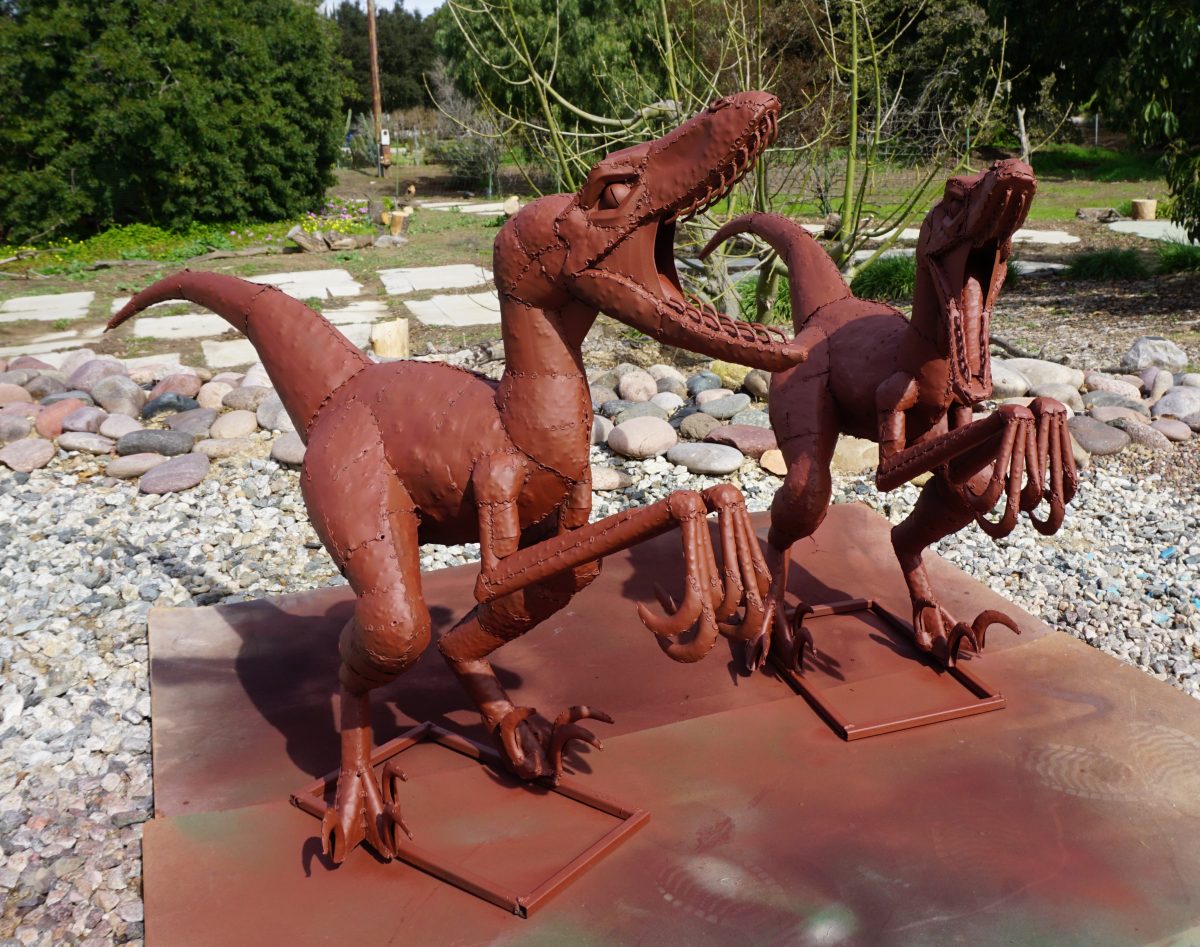
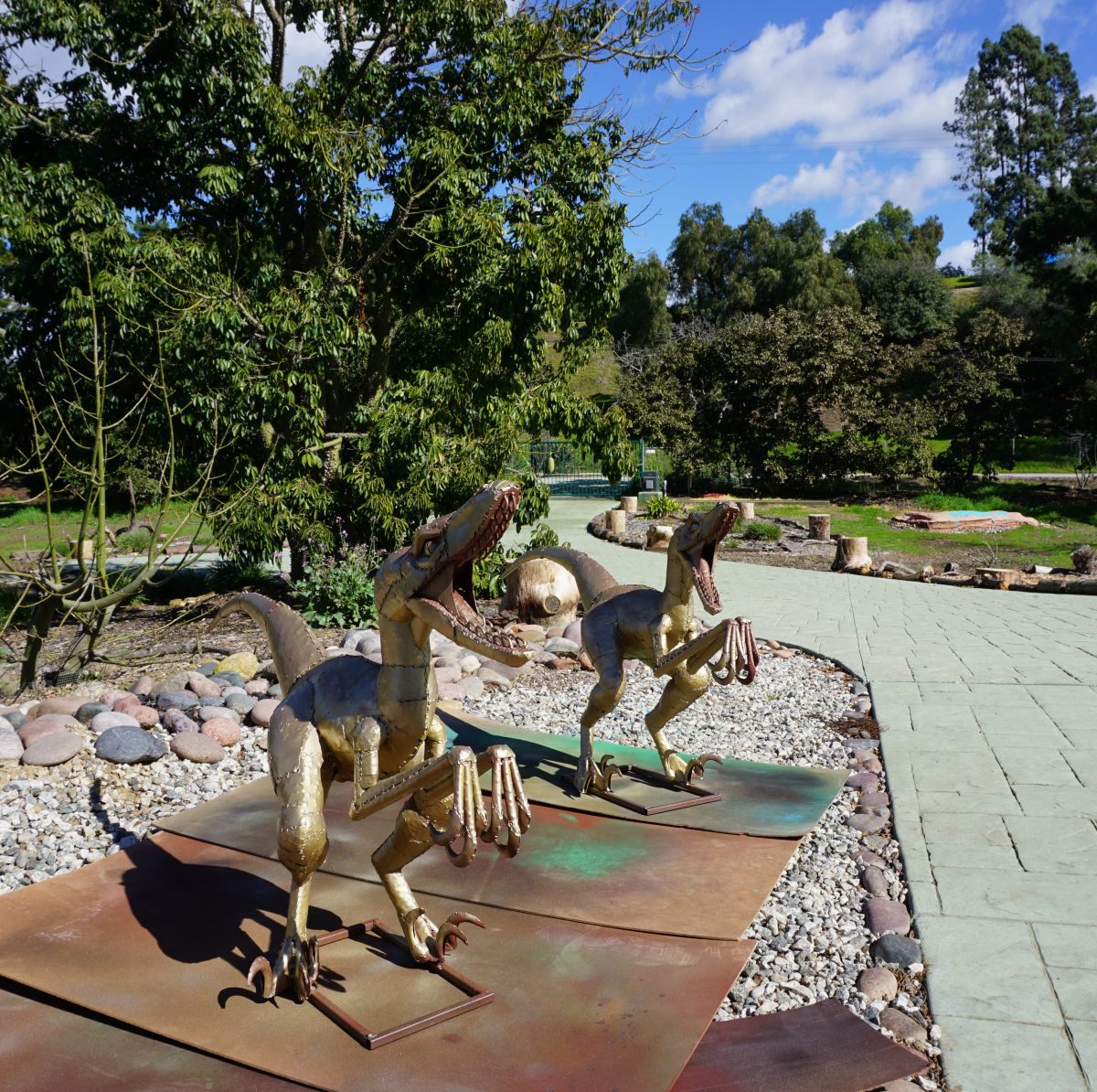
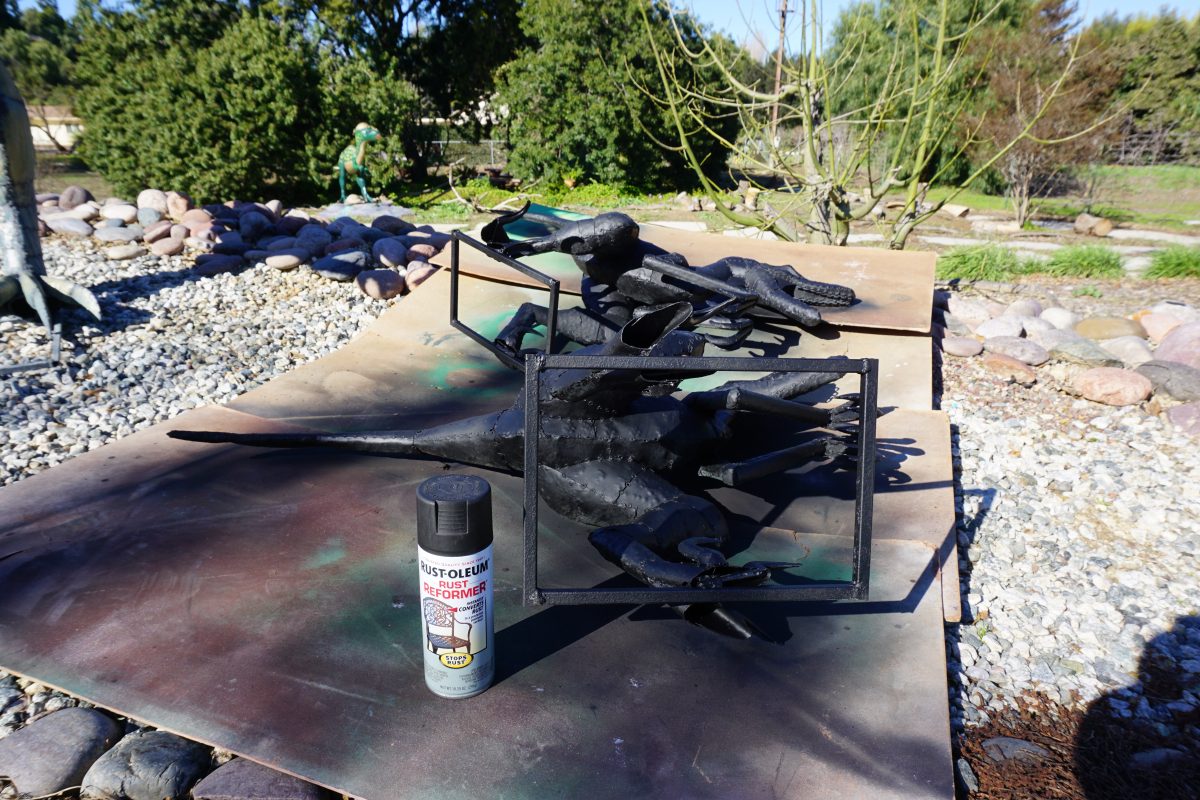
We left off with these Raptors in a beautiful Gold & Grey-Green color after rinsing the Acid Wash and allowing time to completely dry.  As I mentioned last week, I like this look and will incorporate it as a final finish for the body color with a couple of future Raptors to join the Park.  However, these guys are getting the full treatment.  The next step is to coat with Rust Reformer.  It converts the remaining rust to a primer and provides a cool flat black finish.  Another consideration for using this look for the final body color.  Can You imagine painting just the eyes, teeth, tongue and maybe the claws with the flat black for rest!  Pretty Scary!  But not this time.  I start with the Raptors on their sides to allow coating the bottom of the support frame, inside the legs and other tight places underneath.
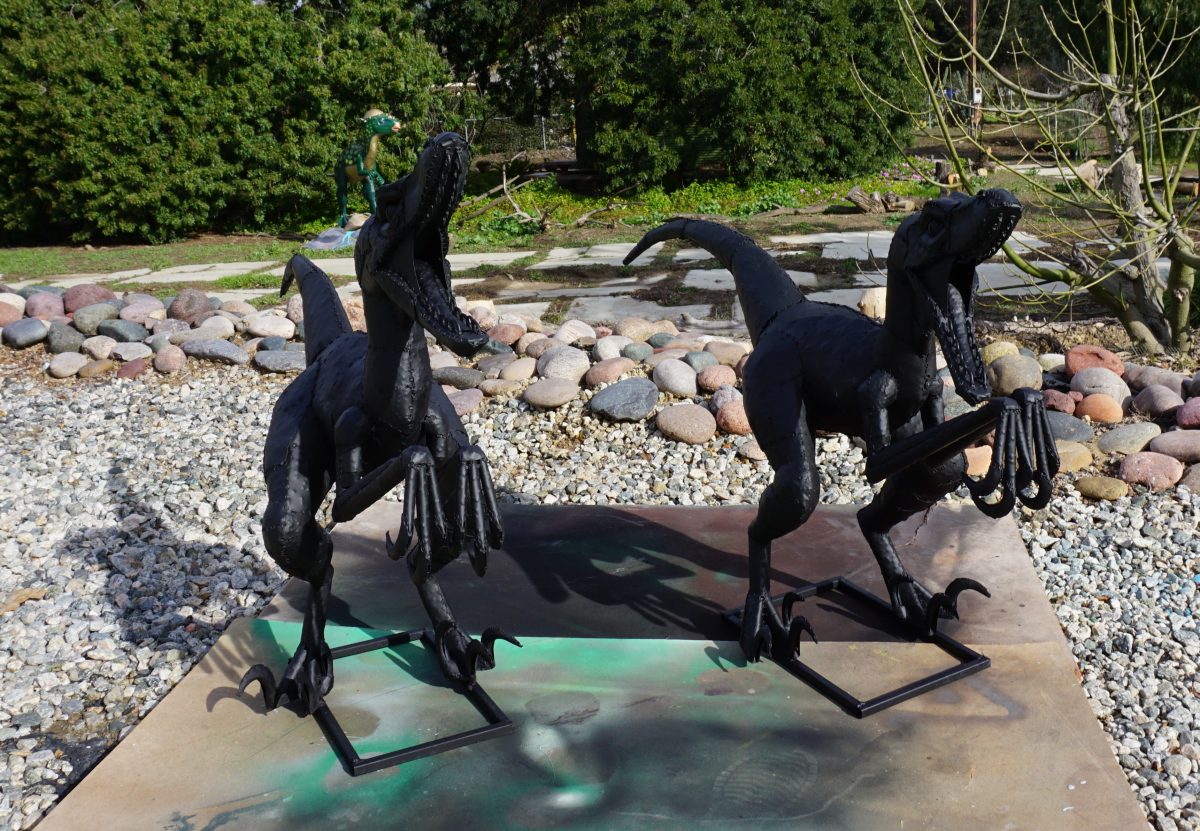
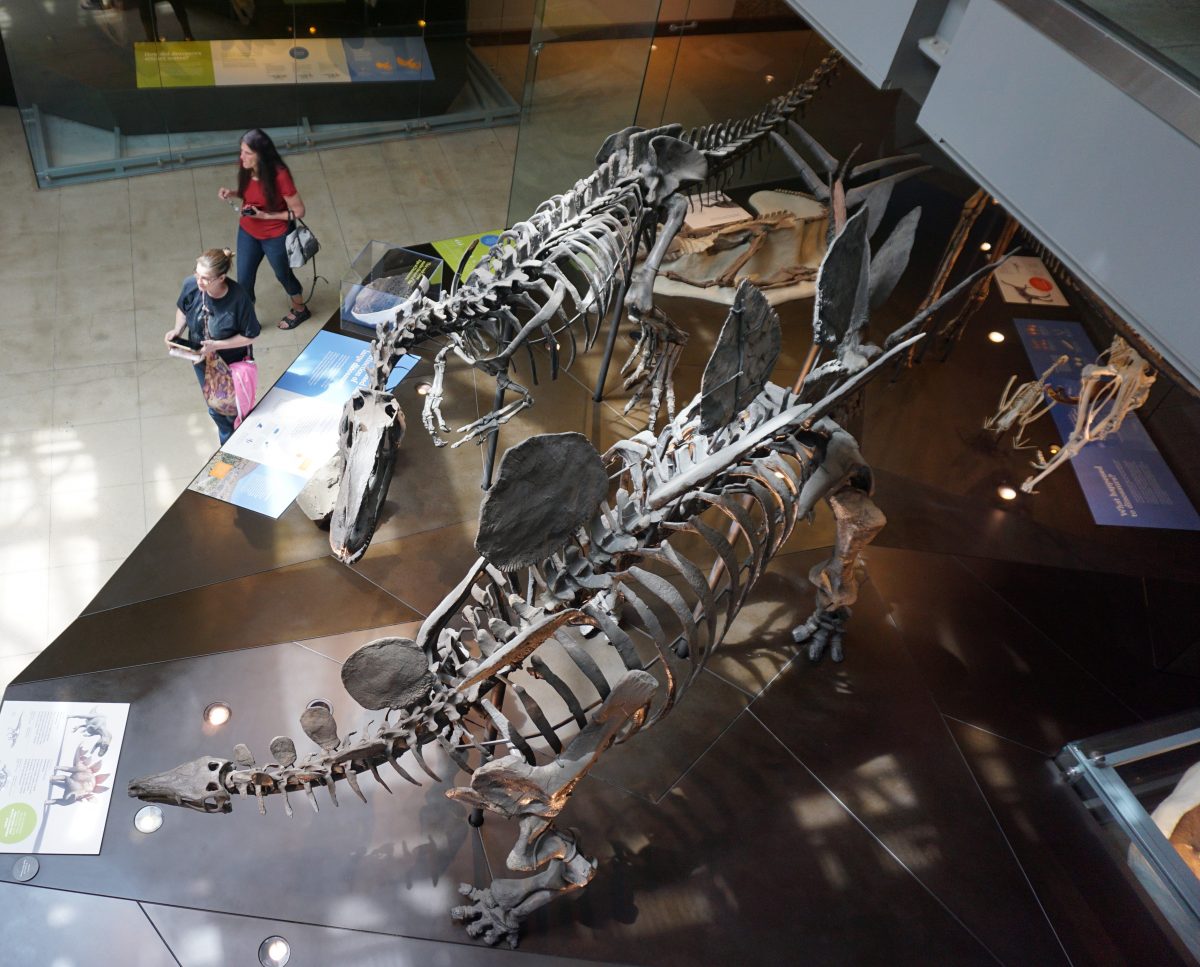
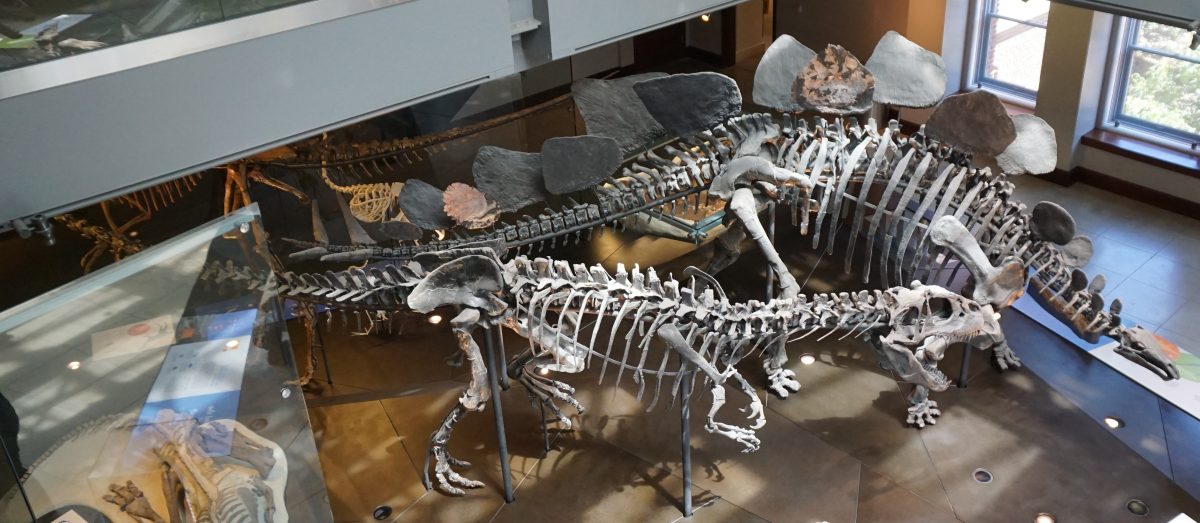
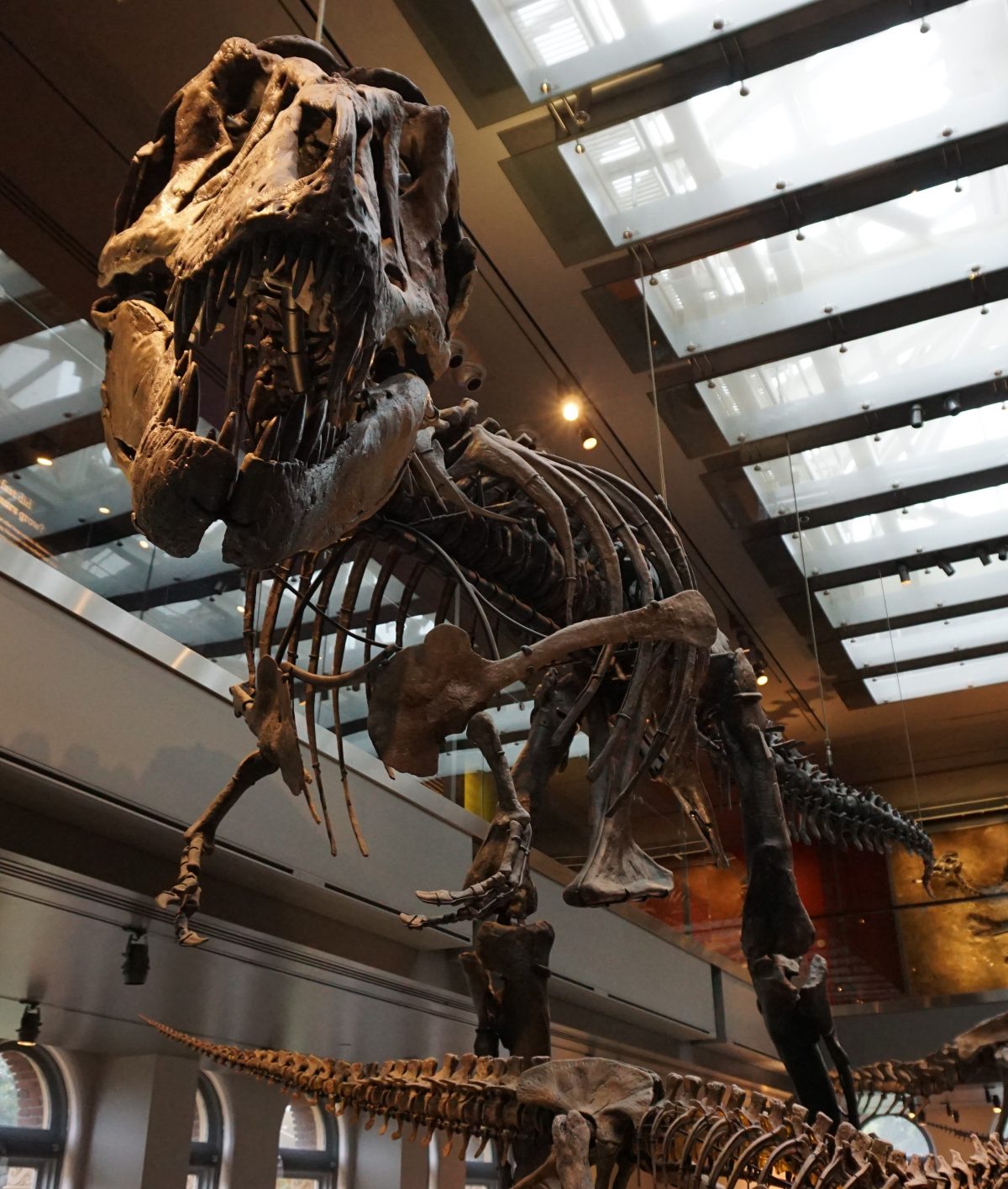
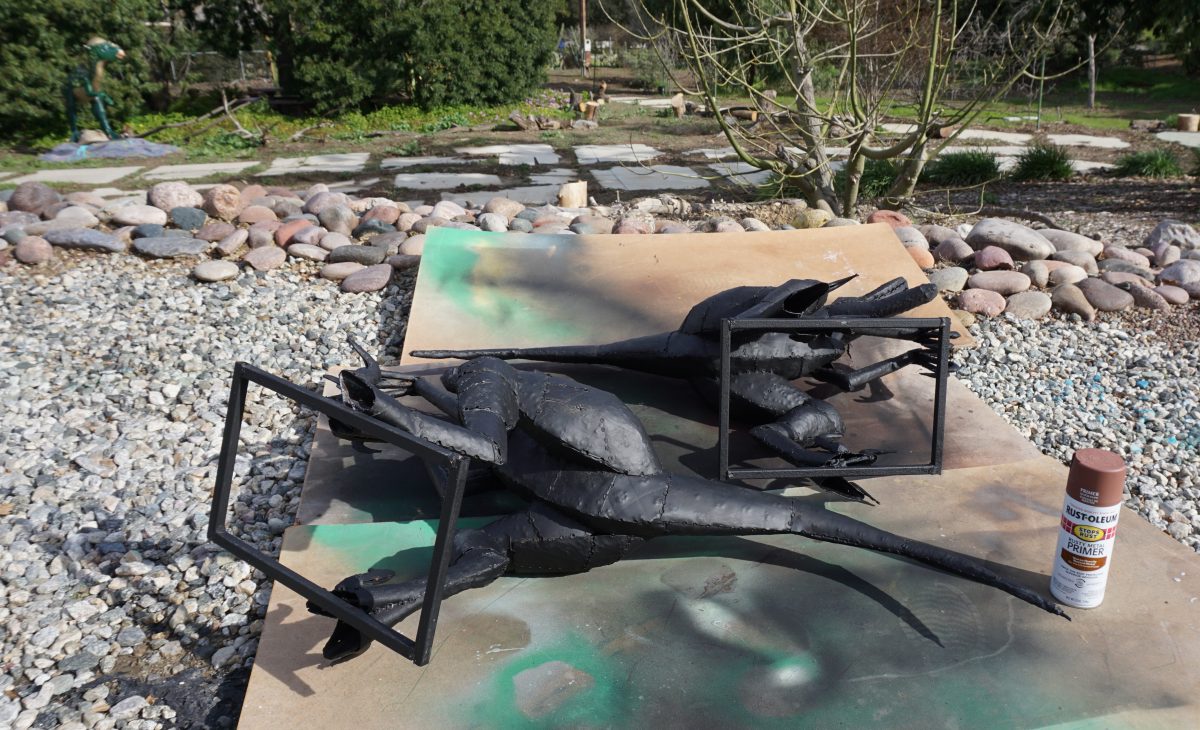
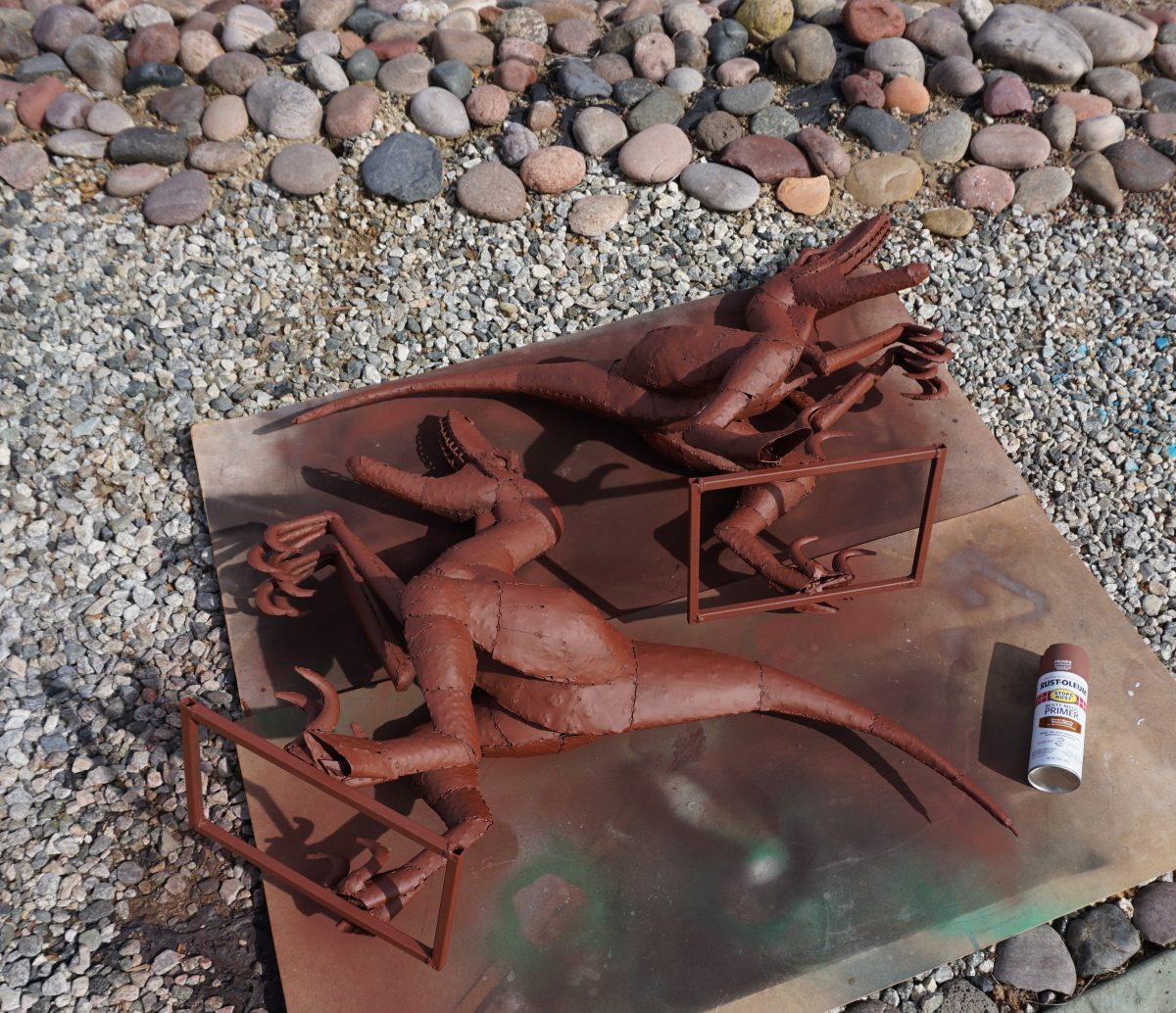
 The next day it’s time for the Rusty Brown Primer.  Again, starting on their sides.  After a couple of hours, the Raptors are dry enough to stand upright and finish with the primer.  Let cure completely for another day.  Then we start adding some color.  Last week we discussed the wrists position on these Raptors.  They should be bird like moving from side to side vs. the begging puppy look.  I’ve provided some examples of other Theropods on display at the Natural History Museum of Los Angeles to reflect the correct positions – an Allosaurus and T-Rex.
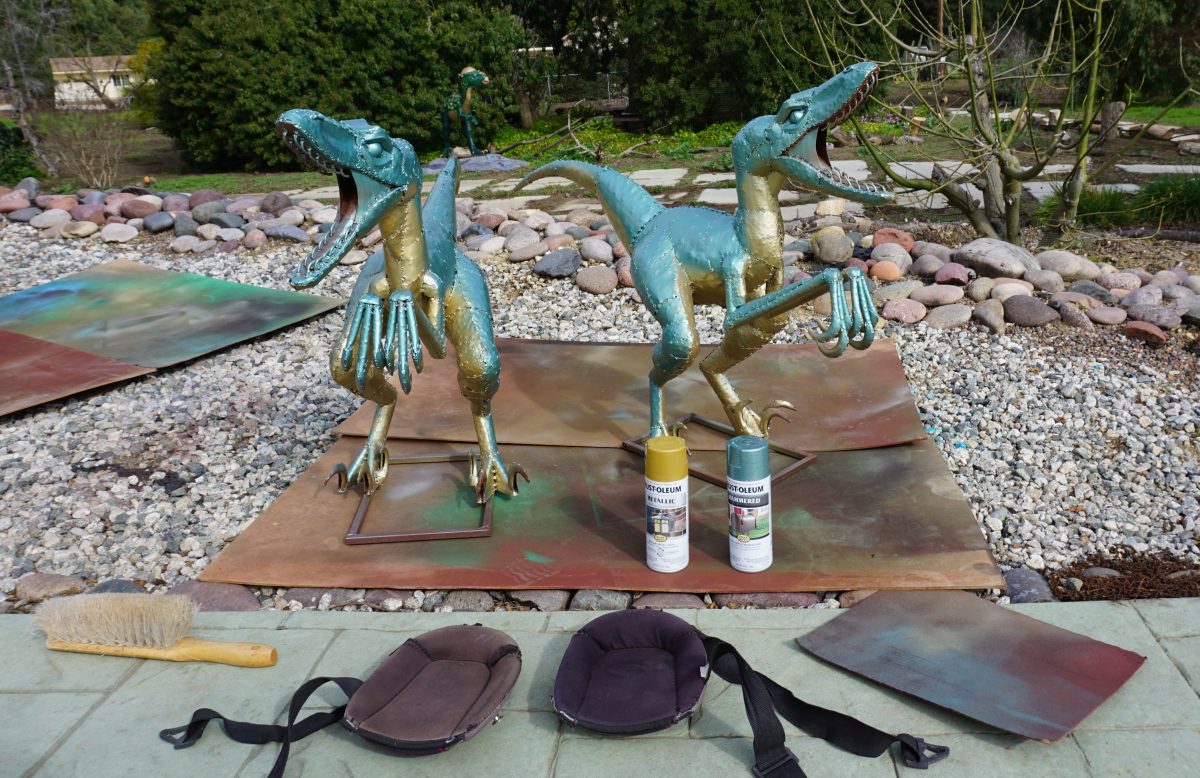
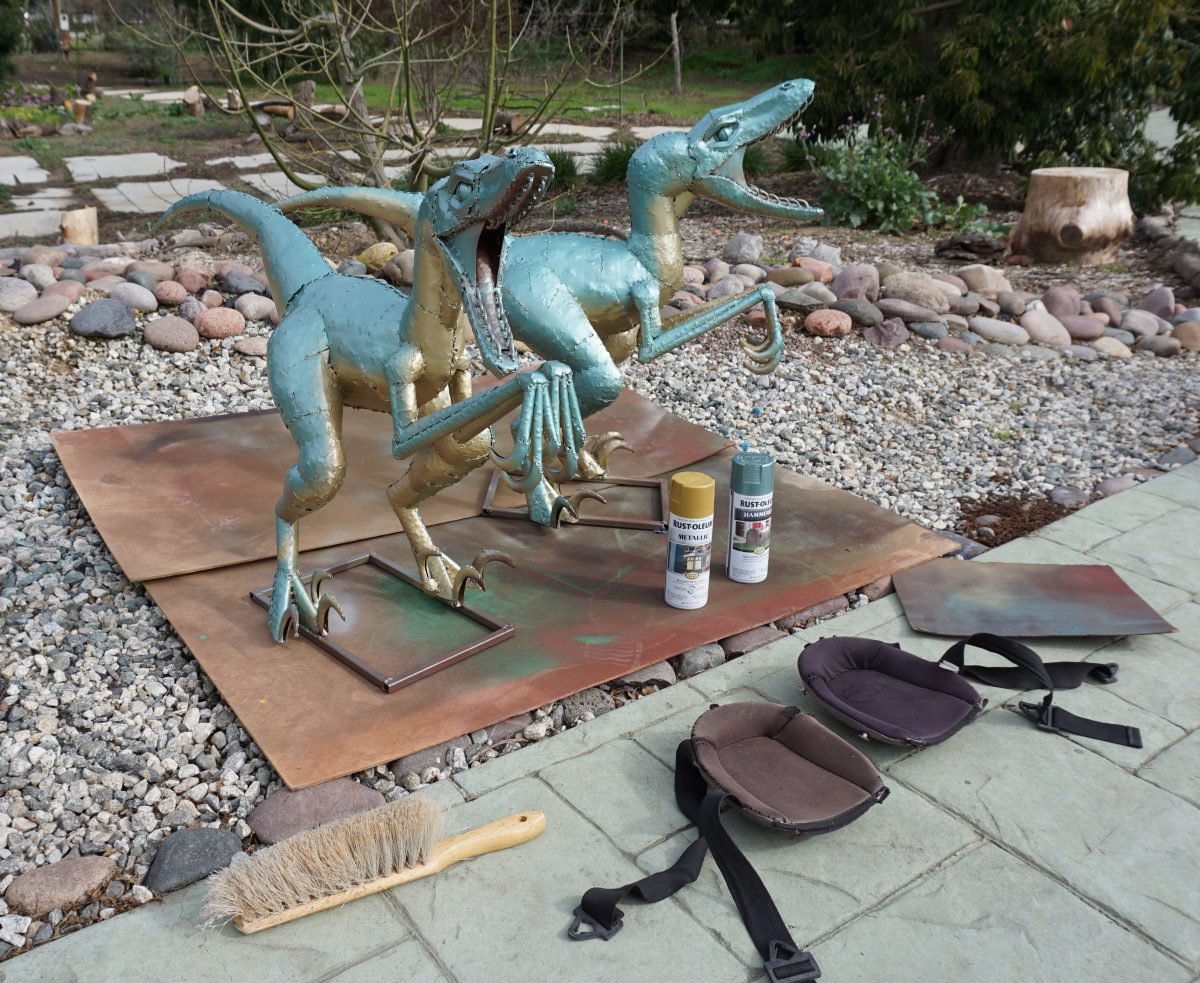
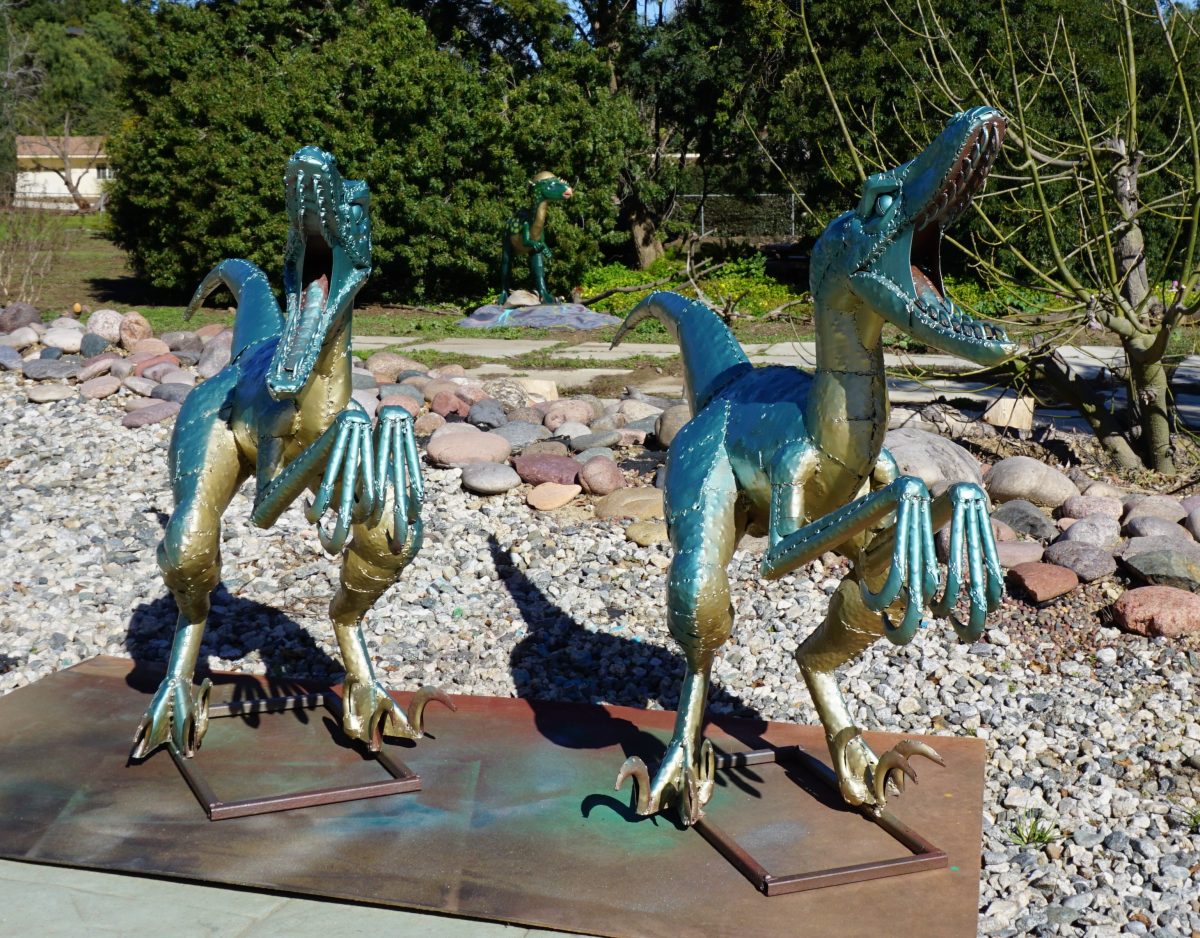
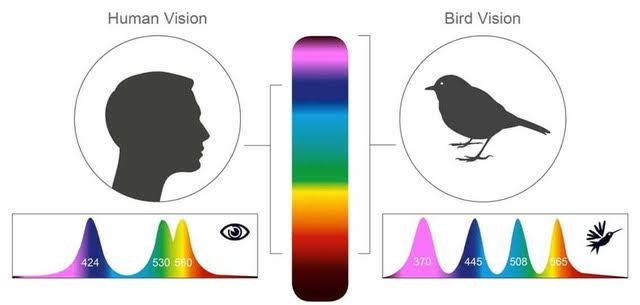
We also discussed the colors birds can see.  Below is a Chart showing the ranges of colors we see and the expanded range for birds provided by Allison J. Shultz, PhD Assistant Curator, Ornithology Research & Collections NHMLA.  It is believed Dinosaurs being ancestors of Birds could see the additional range of colors, as well.  In addition, Nathan D. Smith, PH.D Associate Curator The Dinosaur Institute NHMLA provided an article from Science Magazine regarding Feathers on Velociraptor.  The article is from the September 21, 2007 edition of Science.  The Study confirms the existence of Quill Knobs on the arms of Velociraptor.  Therefore, Velociraptor and some Nonavian Theropod Dinosaurs were at least partially covered in Feathers or Filamentous (thread like) Protofeathers.  With all the bird connections, I believe Dinosaurs were brightly colored.  I selected colors for these Raptors accordingly.  Hammered Verde Green and Gold Rush Metallic for the body.  What Do You Think?
Stay tuned for the addition of more colors for these Raptors to accent the eyes, mouth, tongue and teeth!


“Encouraging the Appreciation of Art and Education through the Inspiration of Dinosaurs”

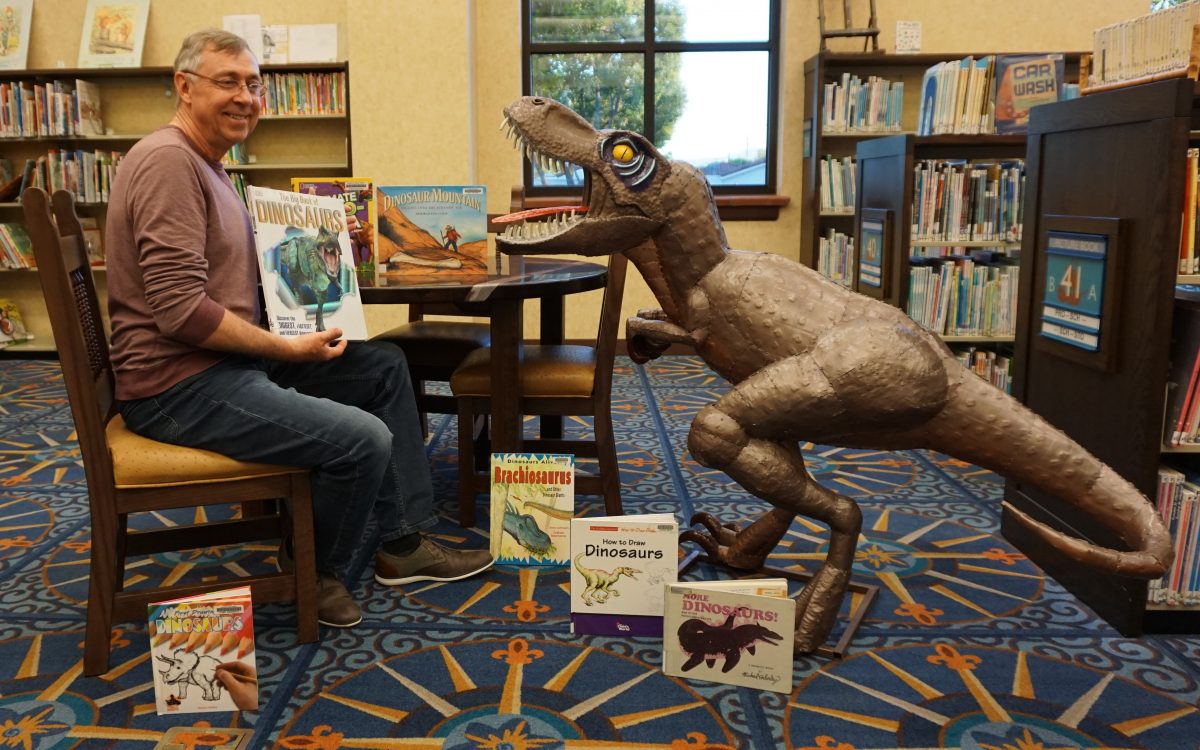
Join Max the T-Rex and I at the City of Camarillo Library for a Reading

of Dinosaur Fun Facts & Fiction Followed by

a “How to Draw Dinosaurs” Activity

on March 12th at 7:00 PM

4101 Los Posas Road, Camarillo
Paul & Prehistoric Pals

Your feedback is appreciated, Thank you!

Leave a Reply Cancel reply

Your email address will not be published. Required fields are marked *

This site uses Akismet to reduce spam. Learn how your comment data is processed.

Recent Posts

  • The Terrible & the tiny
  • Dinosaurs from Pumpkins
  • Dia de Muertos – Day of the Dead
  • Dinosaur Halloween
  • Happy Easter!

Recent Comments

  • Peter Saxby on Dinosaurs at Sea Oaks Canyon Ranch
  • Paul & Prehistoric Pals on Dinosaurs at Sea Oaks Canyon Ranch
  • Pete Saxby on Dinosaurs at Sea Oaks Canyon Ranch
  • Paul & Prehistoric Pals on Contact / Events
  • Mike on Contact / Events

Archives

  • November 2026
  • October 2026
  • April 2026
  • December 2025
  • October 2025
  • September 2025
  • August 2025
  • June 2025
  • May 2025
  • April 2025
  • March 2025
  • February 2025
  • January 2025
  • December 2024
  • November 2024
  • October 2024
  • September 2024
  • August 2024
  • July 2024
  • June 2024
  • May 2024
  • April 2024
  • March 2024
  • February 2024
  • January 2024
  • December 2023
  • November 2023
  • October 2023
  • September 2023
  • August 2023
  • July 2023
  • June 2023
  • May 2023
  • April 2023
  • March 2023
  • February 2023
  • January 2023
  • December 2022
  • November 2022
  • October 2022
  • September 2022
  • August 2022
  • July 2022
  • June 2022
  • May 2022
  • April 2022
  • March 2022
  • February 2022
  • January 2022
  • December 2021
  • November 2021
  • October 2021
  • September 2021
  • August 2021
  • July 2021
  • June 2021
  • May 2021
  • April 2021
  • March 2021
  • February 2021
  • January 2021
  • December 2020
  • November 2020
  • October 2020
  • September 2020
  • August 2020
  • July 2020
  • June 2020
  • May 2020
  • April 2020
  • March 2020
  • February 2020
  • January 2020
  • December 2019
  • November 2019
  • October 2019
  • September 2019
  • August 2019
  • July 2019
  • June 2019
  • May 2019
  • April 2019
  • March 2019
  • February 2019
  • January 2019
  • December 2018
  • November 2018
  • October 2018
  • September 2018
  • August 2018
  • July 2018
  • June 2018
  • May 2018
  • April 2018
  • March 2018
  • February 2018
  • January 2018
  • December 2017
  • November 2017
  • October 2017
  • September 2017
  • August 2017
  • July 2017
  • June 2017
  • May 2017
  • April 2017
  • March 2017
  • February 2017
  • January 2017
  • December 2016
  • November 2016
  • October 2016
  • September 2016
  • August 2016
  • June 2016
  • May 2016
  • March 2016
  • February 2016
  • January 2016
  • December 2015
  • November 2015

Categories

  • Adventures & Activities
  • Artists
  • Preservation
©2026 paulsprehistoricpark.com | Powered by SuperbThemes